

Data collected by employee monitoring tools is typically perceived as a quantitative measure of an employee's efforts for spreadsheets and quarterly reports. X completed tasks, Y missed deadlines, and Z% productivity on average. However, monitoring data can be valuable material for providing constructive, actionable feedback. Want to know how? We have prepared some practical tips.
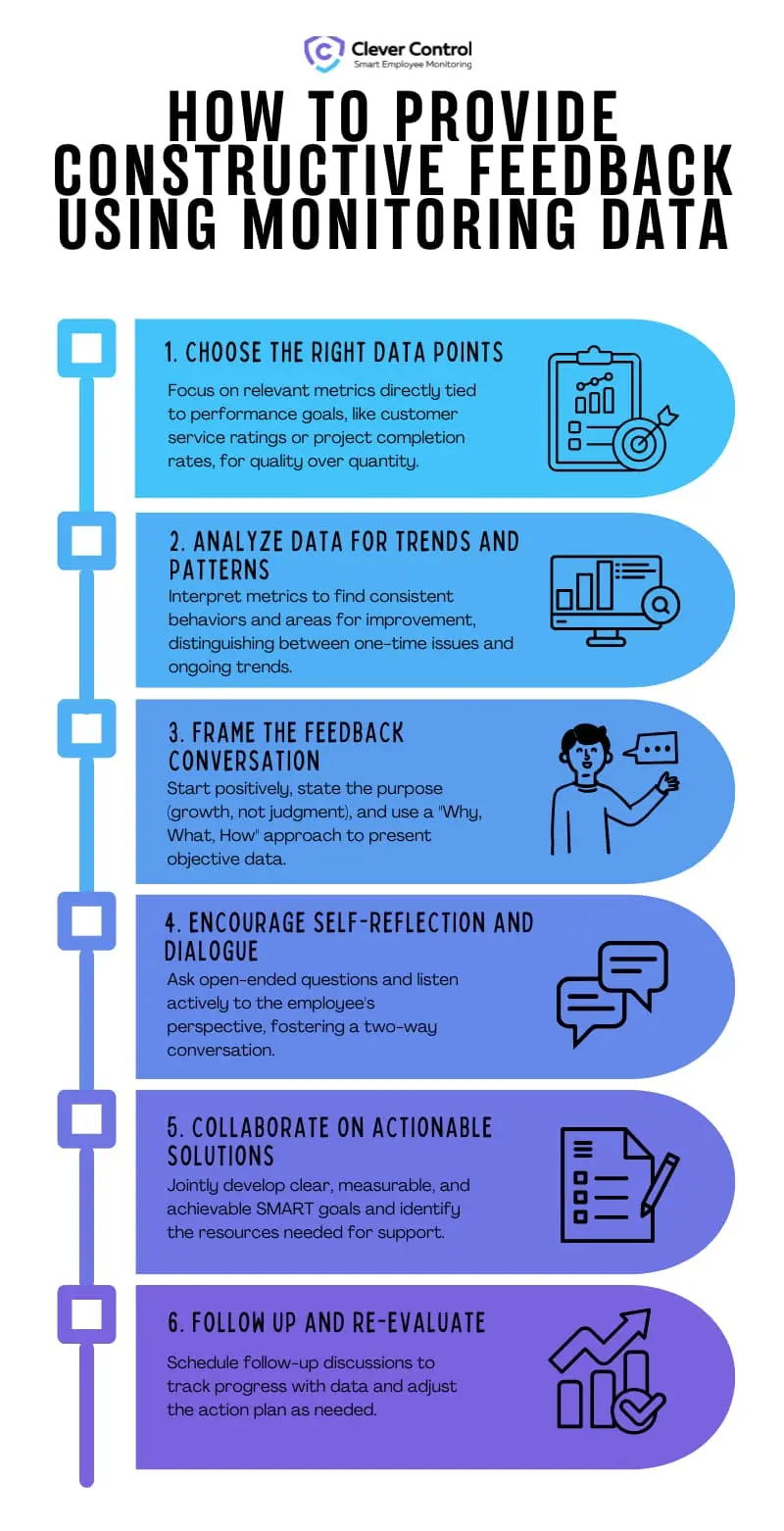
Wskazówka 1. Wybierz odpowiednie punkty danych
Wskazówka 2. Analizuj dane pod kątem trendów i wzorców
A spreadsheet with metrics alone does not bring much benefit. What does is its careful interpretation and discovery of trends and patterns. Has this metric always been low, or is it a one-off dip? Does this employee continuously struggle with a particular type of task? Does their focus always fluctuate at a certain time of the day? When you notice these patterns, you will be able to distinguish between one-time incidents and ongoing problems. Remember to consider the context too that may have influenced the employees' productivity, for example, an increased demand or technical problems.
Wskazówka 3. Określ ramy rozmowy o informacji zwrotnej
Approaching a feedback conversation with data requires a thoughtful touch. Always start with a positive. Acknowledge areas where the data shows strong performance or improvement. This sets a collaborative tone. Then, clearly state the purpose of the discussion: it's about growth and development, not judgment.
Konstruktywna informacja zwrotna oznacza bycie obiektywnym i skupienie się na zachowaniu, a nie na osobowości. Zamiast mówić "Zawsze nie dotrzymujesz terminów", spróbuj powiedzieć "Raporty pokazują, że zadania były konsekwentnie opóźniane w tym kwartale".
Rozważ podejście "Dlaczego, Co, Jak":
- Dlaczego te dane są ważne? (Połącz je z celami zespołu, wpływem na klienta itp.)
- Co konkretnie ujawniają dane? (Przedstaw metryki i zaobserwowane trendy).
- Jak możemy poprawić lub wykorzystać tę wiedzę w przyszłości? (Otwiera to drogę do wspólnego rozwiązywania problemów).
Wskazówka 4. Zachęcaj do autorefleksji i dialogu
Constructive feedback is a two-way street. When you have given your evaluation, give the employee a word to explain their vision of the situation. You may prompt them by asking open questions, such as "What are your thoughts on your results?" or "What do you think might have contributed to that dip in performance?" They will encourage the employee to reflect on their work and share problems they may be experiencing. Often, they'll have valuable context you might not be aware of, or even suggest solutions themselves. Listen actively and take notes of their insights.
Wskazówka 5: Współpracuj nad praktycznymi rozwiązaniami
Konstruktywna informacja zwrotna to tylko pierwszy krok na drodze do poprawy. Kolejnym jest opracowanie planu działania. Możesz użyć systemu celów SMART (Specific, Measurable, Achievable, Relevant, Time-bound) lub dowolnego innego systemu, ale wyznaczone cele powinny być mierzalne, jasne i osiągalne. "Popraw swoją produktywność" brzmi niejasno i rodzi pytania takie jak "Co jest uważane za poprawę?", "Co mam zrobić, aby poprawić?", "Kiedy mam pokazać wyniki?" itp. Ale jeśli ty i pracownik uzgodnicie, że "będę dążyć do skrócenia średniego czasu realizacji zadań o 15% w ciągu następnego miesiąca, korzystając z nowego narzędzia do zarządzania projektami", pracownik będzie dokładnie wiedział, do czego dążyć. Zidentyfikuj wszelkie zasoby, szkolenia lub wsparcie, których może potrzebować od Ciebie lub organizacji, aby osiągnąć te cele. Dzięki takiemu podejściu do współpracy, pracownik będzie postrzegał cię jako wspierającego partnera, a nie surowego przełożonego, co może nawet podnieść jego morale!
Wskazówka 6. Kontynuacja i ponowna ocena
Feedback is an ongoing process, not a one-time event. Use the employee monitoring tool to track the person's progress and, after some time, schedule follow-up discussions to check in on progress and re-examine the monitoring data. Seeing improvements is an incredible motivation for employees! But if the progress is minimal or too slow, it is a sign to adjust and enhance the action plan.
Budowanie kultury wzrostu
Building constructive feedback based on monitoring data not only enriches individual performance reviews with objective information and makes the manager's work easier. It also helps create a transparent and strong growth-oriented culture. Feedback grounded in objective information makes employees take ownership of their work and development. It moves away from subjective critiques and towards a shared understanding of performance and potential.