

Data collected by employee monitoring tools is typically perceived as a quantitative measure of an employee's efforts for spreadsheets and quarterly reports. X completed tasks, Y missed deadlines, and Z% productivity on average. However, monitoring data can be valuable material for providing constructive, actionable feedback. Want to know how? We have prepared some practical tips.
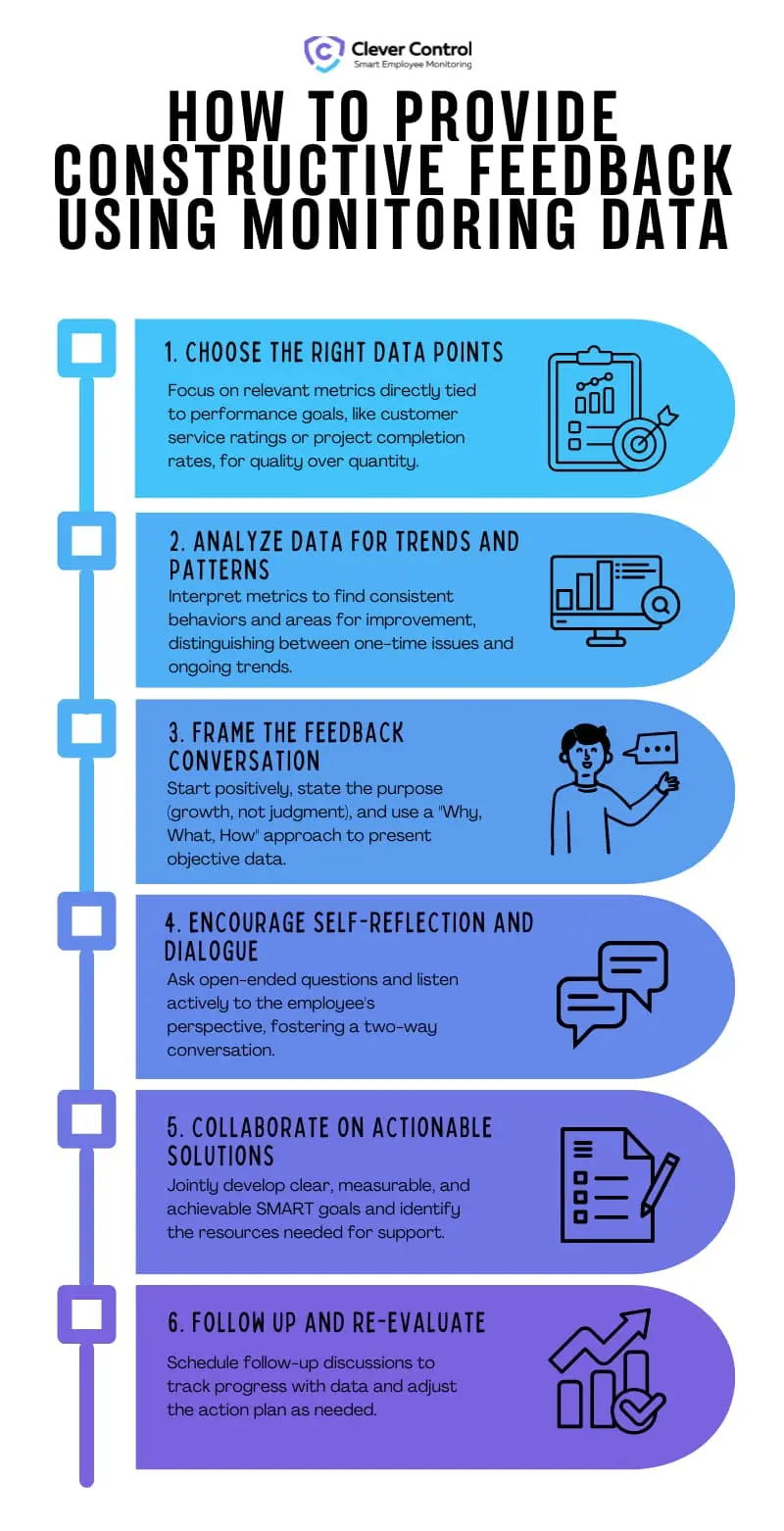
Suggerimento 1. Scegliere i punti dati giusti
Suggerimento 2. Analizzare i dati per individuare tendenze e modelli
A spreadsheet with metrics alone does not bring much benefit. What does is its careful interpretation and discovery of trends and patterns. Has this metric always been low, or is it a one-off dip? Does this employee continuously struggle with a particular type of task? Does their focus always fluctuate at a certain time of the day? When you notice these patterns, you will be able to distinguish between one-time incidents and ongoing problems. Remember to consider the context too that may have influenced the employees' productivity, for example, an increased demand or technical problems.
Suggerimento 3. Inquadrare la conversazione di feedback
Approaching a feedback conversation with data requires a thoughtful touch. Always start with a positive. Acknowledge areas where the data shows strong performance or improvement. This sets a collaborative tone. Then, clearly state the purpose of the discussion: it's about growth and development, not judgment.
Un feedback costruttivo significa essere obiettivi e concentrarsi sul comportamento piuttosto che sulla personalità. Invece di dire "Manchi sempre le scadenze", provate a dire "I rapporti mostrano che i compiti sono stati costantemente ritardati in questo trimestre".
Considerate un approccio del tipo "Perché, cosa, come":
- Perché questi dati sono importanti (collegarli agli obiettivi del team, all'impatto sui clienti, ecc.)
- Che cosa rivelano i dati nello specifico? (Presentare le metriche e le tendenze osservate).
- Come possiamo migliorare o sfruttare questa intuizione in futuro? (Questo apre la strada alla risoluzione collaborativa dei problemi).
Suggerimento 4. Incoraggiare l'auto-riflessione e il dialogo
Constructive feedback is a two-way street. When you have given your evaluation, give the employee a word to explain their vision of the situation. You may prompt them by asking open questions, such as "What are your thoughts on your results?" or "What do you think might have contributed to that dip in performance?" They will encourage the employee to reflect on their work and share problems they may be experiencing. Often, they'll have valuable context you might not be aware of, or even suggest solutions themselves. Listen actively and take notes of their insights.
Suggerimento 5: collaborare a soluzioni attuabili
Il feedback costruttivo è solo il primo passo nel percorso di miglioramento. Il prossimo è sviluppare un piano d'azione. Potete utilizzare un sistema di obiettivi SMART (Specific, Measurable, Achievable, Relevant, Time-bound) o qualsiasi altro sistema, ma gli obiettivi fissati devono essere misurabili, chiari e raggiungibili. "Migliorare la produttività" suona vago e solleva domande come "Cosa si intende per miglioramento?", "Cosa devo fare per migliorare?", "Quando dovrei mostrare i risultati?", ecc. Ma se voi e il dipendente vi accordate su: "Nel prossimo mese mi prefiggerò di ridurre del 15% il tempo medio di completamento dei miei compiti utilizzando il nuovo strumento di gestione dei progetti", il dipendente saprà esattamente a cosa aspirare. Identificate tutte le risorse, la formazione o il supporto di cui potrebbe aver bisogno da parte vostra o dell'organizzazione per raggiungere questi obiettivi. Con un approccio così collaborativo, il dipendente vi vedrà come un partner di supporto piuttosto che come un supervisore severo, il che potrebbe persino aumentare il suo morale!
Suggerimento 6. Seguire e rivalutare
Feedback is an ongoing process, not a one-time event. Use the employee monitoring tool to track the person's progress and, after some time, schedule follow-up discussions to check in on progress and re-examine the monitoring data. Seeing improvements is an incredible motivation for employees! But if the progress is minimal or too slow, it is a sign to adjust and enhance the action plan.
Costruire una cultura della crescita
Building constructive feedback based on monitoring data not only enriches individual performance reviews with objective information and makes the manager's work easier. It also helps create a transparent and strong growth-oriented culture. Feedback grounded in objective information makes employees take ownership of their work and development. It moves away from subjective critiques and towards a shared understanding of performance and potential.