
よくある質問
従業員の監視一般的な質問
Employee monitoring software allows organizations to track work hours and analyze how employees use their work time and company devices. Such software usually monitors the start and end of the work day, idle time, computer activity, application and website usage, communication, and in some cases, location. Companies use employee monitoring software to evaluate productivity, enhance security, protect data, and ensure compliance with company policies.
Typically, employee monitoring software is a small program (sometimes called an agent) that employers install on employees' computers or devices. This agent works in the background and collects data on various activities. The collected data is then transmitted to a central server or dashboard, where authorized personnel, such as managers and administrators, can view and analyze it.
When implemented transparently and with ethical considerations, employee monitoring is a powerful tool for increasing productivity. It provides insights into work processes, helps detect inefficiencies, and encourages data-driven measures to improve the situation. Besides, the awareness of being monitored can encourage employees to stay focused and on task.
When choosing employee monitoring software, consider features that align with your needs, such as tracking work hours, improving productivity, or maintaining security. Valuable features are:
- time tracking;
- website and application usage monitoring;
- idle time detection;
- screenshots/screen recording;
- reporting and analytics;
- alerts and notifications;
- online monitoring dashboard;
- integrations.
Employee monitoring is important because it contributes to a more secure, efficient, compliant, and productive work environment. It provides employers with valuable insights into how work time is spent, helping to:
- highlighting inefficient work processes;
- improving productivity;
- increasing security;
- ensuring compliance with company policies and legal requirements;
- optimizing resources
- supporting performance evaluations.
When implemented thoughtfully and transparently, employee monitoring leads to several positive outcomes for both the organization and the employees. It is a powerful tool to improve workflow efficiency and productivity. It can encourage employees to be responsible for their work hours, identify training needs, and help managers recognize and reward performance. Besides, employee monitoring helps protect the company against data breaches, cyber threats, and inappropriate behavior, creating a safer work environment for everyone.
The main benefits of employee monitoring are better performance and productivity, enhanced data security, lower risks or insider threats, improved accountability, better resource management and allocation, and informed decision-making.
On the other hand, monitoring can potentially decrease employee morale, undermine trust, create unwanted stress and pressure, and negatively affect the company culture. Besides, if tracking is implemented without considering applicable regulations, it can raise legal and ethical concerns.
Employers typically state they track and monitor employee behaviors to improve productivity, enhance security and protect sensitive data, ensure compliance with internal policies and external regulations, prevent time theft, and gain insights into work patterns for better resource management and performance evaluation.
The primary business reasons for employee monitoring include safeguarding company assets and intellectual property, minimizing legal liabilities through compliance and record-keeping, and optimizing workflows. Besides, employee monitoring is a valuable data source to back decisions aimed at improving overall business performance and profitability.
These risks include potentially damaging employee trust and morale, increasing stress and anxiety among the workforce, facing legal challenges related to privacy violations, misinterpreting data which could lead to unfair treatment, and potentially stifling creativity and innovation due to constant surveillance.
Critics fear that employee monitoring programs can lead to a surveillance-heavy work culture that erodes privacy, reduces autonomy, increases job-related stress and burnout, creates an imbalanced power dynamic between employers and employees, and could be used to discriminate against certain workers or suppress legitimate workplace organizing.
The legality of employee monitoring depends on the location. Generally, it is legal in many jurisdictions, including the USA, Europe, and India. However, the scope of activities the employer can monitor may vary depending on the applicable state and local regulations. Besides, organizations are often obliged to notify the staff about the monitoring.
Generally, employers are allowed to track computer and internet usage on company equipment, monitor work-related communications through company email and messaging systems, and use video surveillance in common work areas. Monitoring of personal devices, private communications, or private areas like restrooms is typically restricted or prohibited.
Identifying a single "weakest" employee monitoring law is difficult. Legal frameworks differ significantly across jurisdictions: some deliver minimal employee privacy protections, while others have stricter notification and consent requirements. Generally, areas with fewer specific statutes addressing electronic monitoring and workplace privacy may offer less protection to employees.
Employees can check for monitoring software by looking for unfamiliar processes running in their computer's Task Manager or system monitor, analyzing network activity for unusual data transfers, and using security programs.
There are several signs that the employer may be monitoring the computer: unusual computer behavior, such as slow performance, strange pop-ups or errors, suspicious processes in the Task Manager or Activity Monitor (on macOS), or increased network activity. If employees notice these signs, they can check installed apps for unfamiliar names, use antivirus or security software, or consult the IT or HR specialist in their organization.
On macOS, employees can open Activity Monitor to view running processes and identify unfamiliar or suspicious applications. One can also examine login items and launch agents that start automatically, review network utility for unusual connections, and check System Settings/Preferences for installed profiles that might indicate device management or monitoring.
Attempting to block employee monitoring software on a company-owned device is generally not advisable. It may violate company policy, potentially leading to disciplinary action, including termination. Technical methods to impede monitoring, such as using virtual machines, attempting to disable processes, or using tools to mimic activity, may be detectable by the employer and could have serious consequences. It is best to understand and comply with your company's monitoring policies.
CleverControl ソフトウェア FAQ
クレバーコントロールはクラウドベースのソフトウェアなので、従業員のコンピュータにインストールされたクレバーコントロールエージェントによって記録されたデータはすべて、安全な遠隔地のサーバーに保存されます。また、データにアクセスするためには、リモートサーバー上の情報を安全に確認できるよう、アカウントを登録する必要があります。
クレバーコントロールは、Windows OSおよびOS Xに対応しており、最新のMicrosoft Windows 10を含むWindowsバージョン、または10.13 High Sierraバージョン以上のOS Xが動作するノートパソコンやデスクトップにインストールすることが可能です。
CleverControl Agentをインストールする前に、アカウントにサインアップしておくとより便利です。なぜなら、インストールを完了するには、クラウドサーバーへの接続を確立するために、アカウントの詳細を入力する必要があるからです。そのため、アカウントをお持ちでない場合は、アカウントを作成するよう促されます。
CleverControl is intended for lawful employee monitoring on company-owned devices and should be used with proper authorization, employee notification, and internal policies. Employers are responsible for informing employees about monitoring and configuring the software according to applicable laws and workplace privacy requirements. Employees can get access to the collected data via the Self-Monitoring feature.
Yes. CleverControl Agent can record configured work-related activity on authorized company devices, according to the organization's monitoring policy and applicable law. Reports may include application usage, website activity, screenshots, and other enabled features, where legally permitted and properly disclosed.
Yes. CleverControl can record configured website activity on authorized company devices. Depending on the settings, applicable laws, and the company's internal policies, authorized managers may review visited websites and related screenshots.
はい、ウェブサイトブロッカーは、CleverControl Agentの機能の1つです。特定のウェブページまたはカテゴリ全体、例えばすべてのソーシャルネットワークをブロックすることができます。これは、お客様のアカウントの "リモート設定 "で行うことができます。
CleverControl Agentのデータを見るには、ダッシュボードでリモートアカウントにログインする必要があります: https://dashboard.clevercontrol.com/ .ログインには、どのデバイスのどのウェブブラウザでも使用できます。
現時点では、プログラムのインストールには、管理者権限を持つコンピューターへのアクセスが必要です。ただし、インストールには数分しかかかりません。
すべての設定は、ダッシュボードアカウントからリモートで変更・適用することができます。リモート設定」タブで設定を変更し、「このコンピューターに適用する」または「すべてのコンピューターに適用する」をクリックします。
保存条件はデータの種類によって異なり、以下の通りです。イベント:1年、スクリーンショット:6ヶ月、画面録画、ウェブカメラ録画、通話録音:1ヶ月。その後、データは自動的に削除され、回復の可能性はありません。イベントログとスクリーンショットをそれ以上保存したい場合は、レポートを使用してデータをエクスポートすることができます。
Important: Automatic start scheduling should be configured only on authorized company devices and according to the organization's written monitoring policy, working-hours rules, and applicable law. Monitored users must be informed in advance, and consent must be obtained where required.
CleverControlは、デフォルトではコンピュータの電源を入れたときに起動します。代わりに、1日のうちでスケジュールされた時間に実行する必要がある場合もあります。現在のバージョンのプログラムでは、CleverControlが自動的に起動するようにスケジュールを設定することはできません。しかし、Windowsタスクスケジューラの助けを借りて、それを行うことができます。
タスクバーのWindowsアイコンをクリックします。プログラムのリストを下にスクロールして、Windows管理ツールを見つけます。フォルダをクリックして展開し、[タスクスケジューラ]をクリックして実行します。
![タスクバーのWindowsアイコンをクリックします。プログラムのリストを下にスクロールして、Windows管理ツールを見つけます。フォルダをクリックして展開し、[タスクスケジューラ]をクリックして実行します。](/images/faq/run_1.jpg)
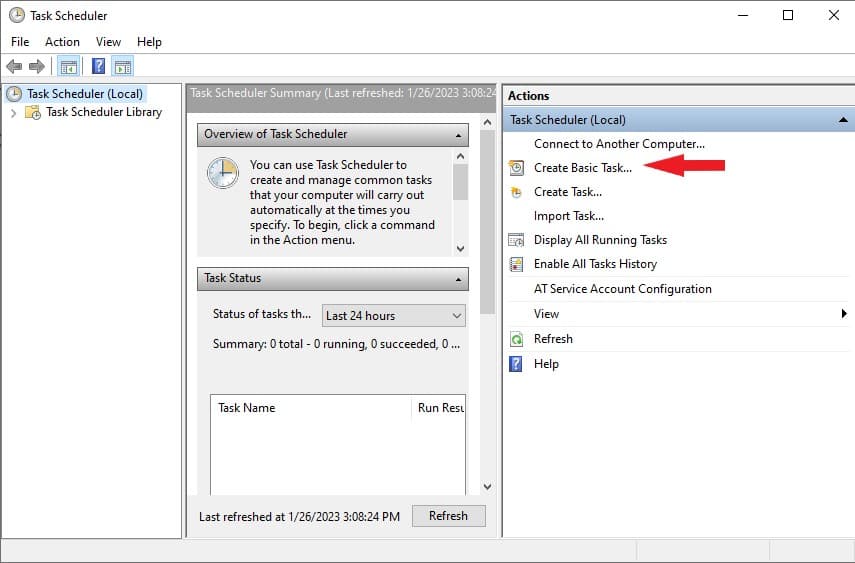
基本タスクの作成をクリックします。
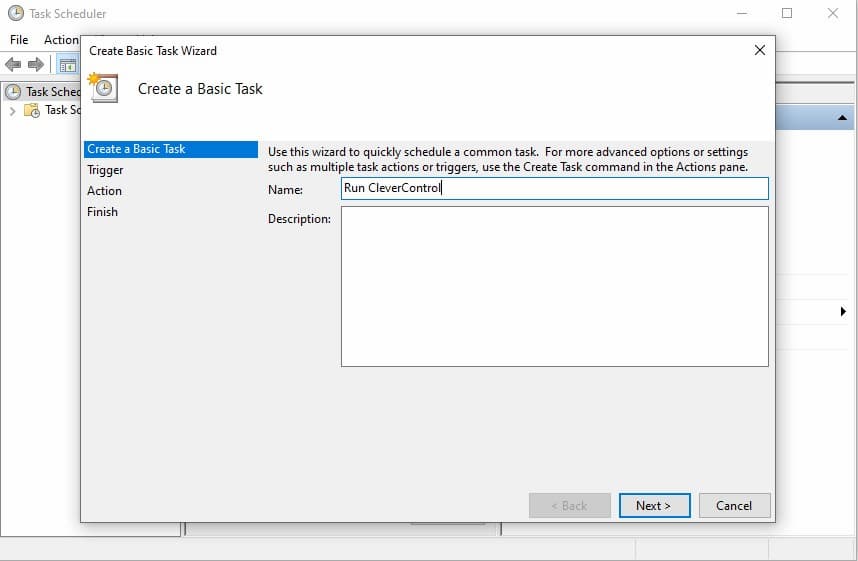
タスクの名前を入力します。例えば、"Run CleverControl "などです。説明を追加します(オプション)。その後、Next.をクリックします。
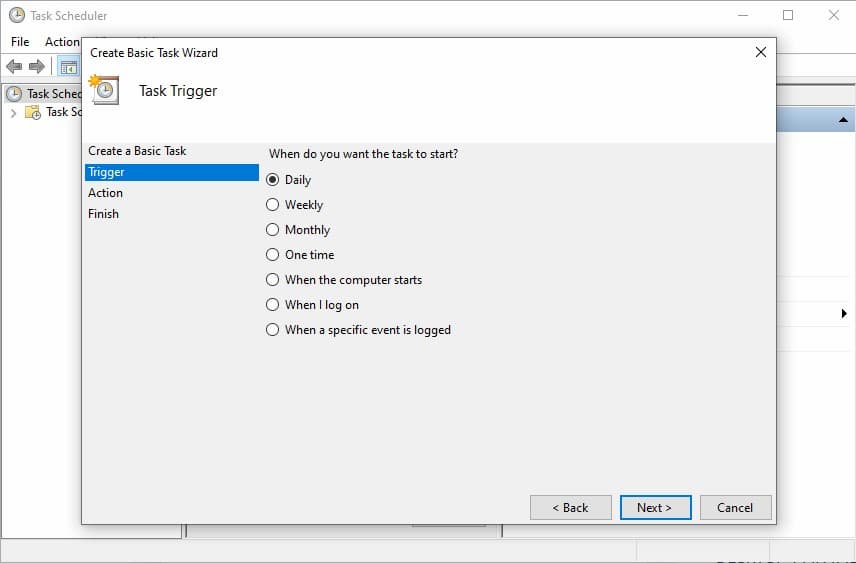
デイリーを選択し、次へをクリックします。
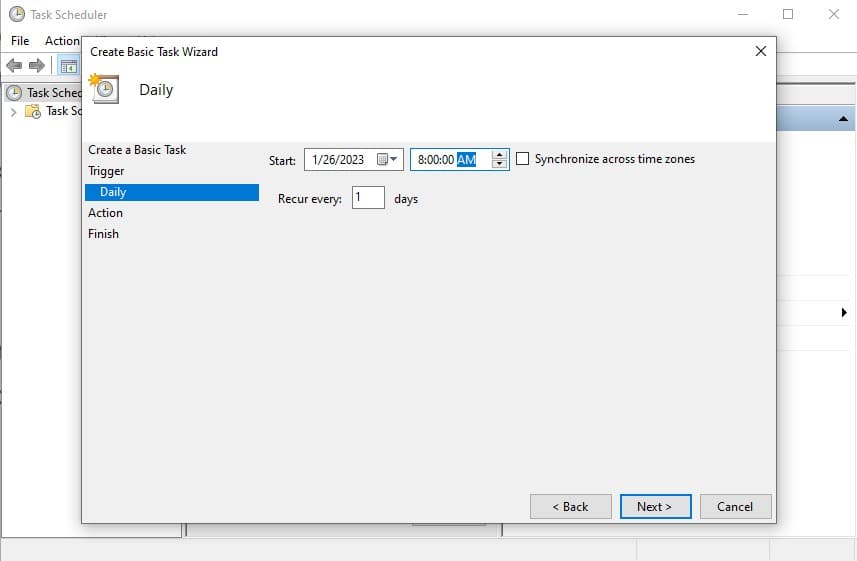
CleverControlを実行する時刻を設定します(例:午前8時00分00秒)。次へをクリックして続行します。
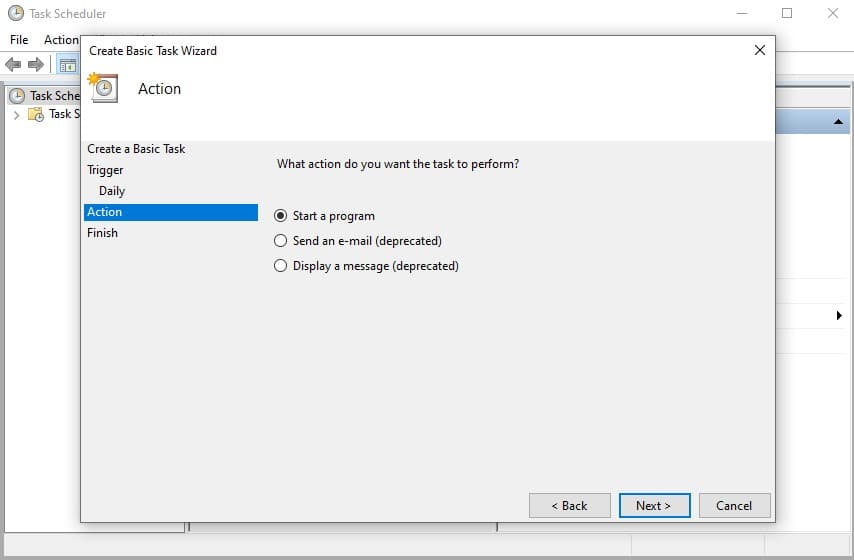
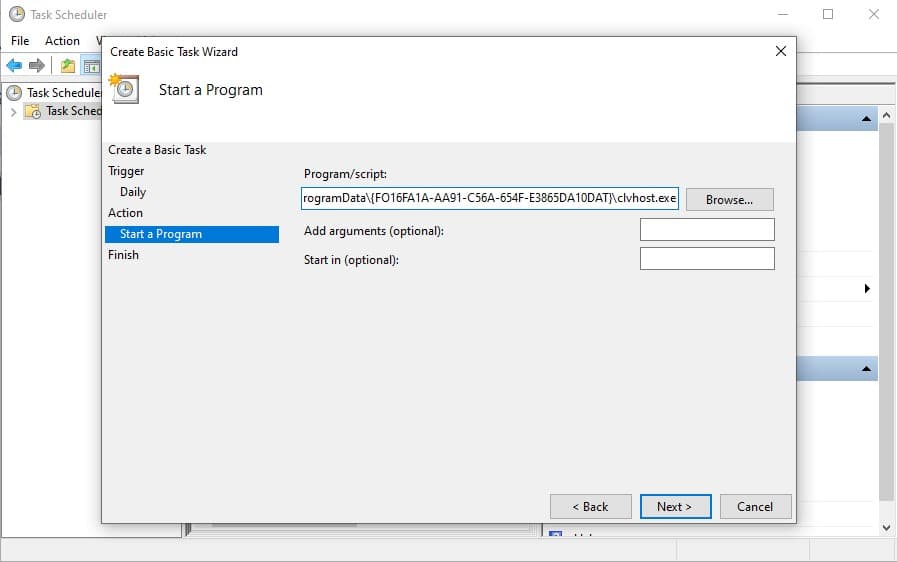
Copy and paste the path: C:\ProgramData\FO16FA1A-AA91-C56A-654F-E3865DA10DAT\clvhost.exe to the Program/Script field. Click Next.
終了をクリックします。
Important: Automatic stop scheduling can help align monitoring with working hours and internal policy requirements. Organizations should configure monitoring schedules according to their written monitoring policy, notify monitored users in advance, and obtain consent where required by law.
デフォルトでは、監視対象のコンピュータの電源が入っている間、CleverControlは常時稼働しています。しかし、仕事でパソコンを使用している場合、勤務時間が終了したら監視を終了させたいと思うものです。現在のバージョンのプログラムでは、CleverControlが自動的に停止するようにスケジュールを設定することはできません。しかし、Windowsタスクスケジューラーを使えば、それを実現することができます。
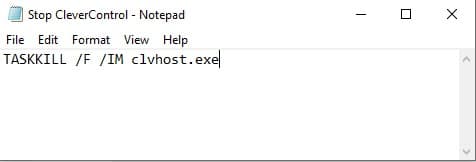
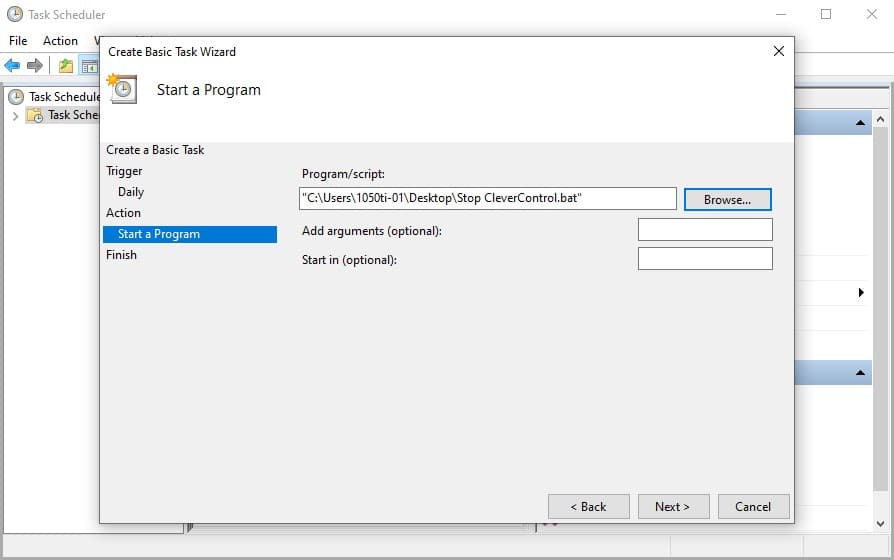
まず、プログラムの実行と終了を行うバッチスクリプトを作成します。メモ帳を開いて、次のように入力します。TASKKILL /F /IM clvhost.exe
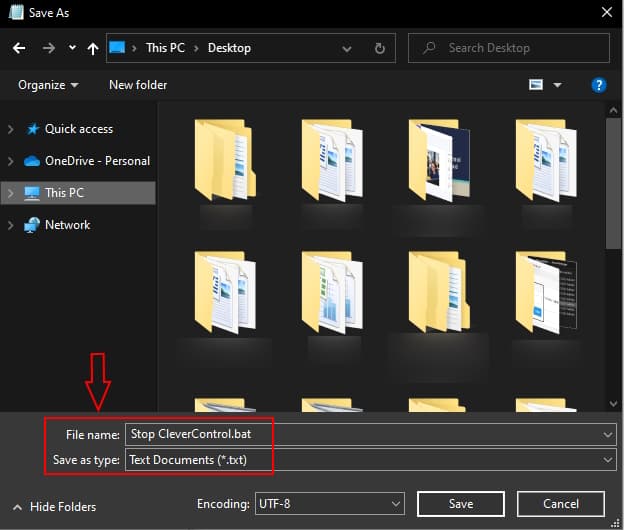
「Stop CleverControl.bat」のように、.batという拡張子を付けて保存します。
その後、CleverControlを停止するタスクをスケジュールする必要があります。タスクバーのWindowsアイコンをクリックします。プログラムのリストをスクロールダウンし、Windows管理ツールを見つけます。フォルダをクリックして展開し、[タスクスケジューラ]をクリックして実行します。
![その後、CleverControlを停止するタスクをスケジュールする必要があります。タスクバーのWindowsアイコンをクリックします。プログラムのリストをスクロールダウンし、Windows管理ツールを見つけます。フォルダをクリックして展開し、[タスクスケジューラ]をクリックして実行します。](/images/faq/stop_3.jpg)
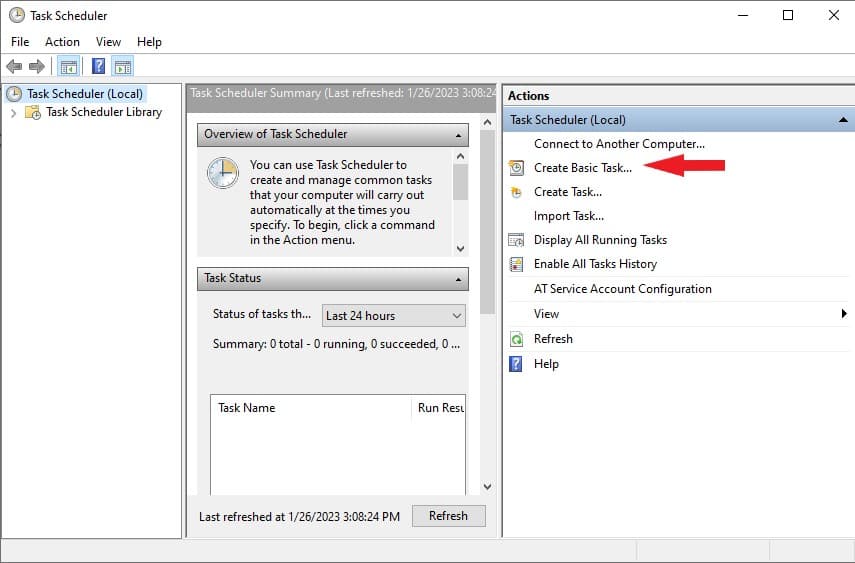
基本タスクの作成をクリックします。
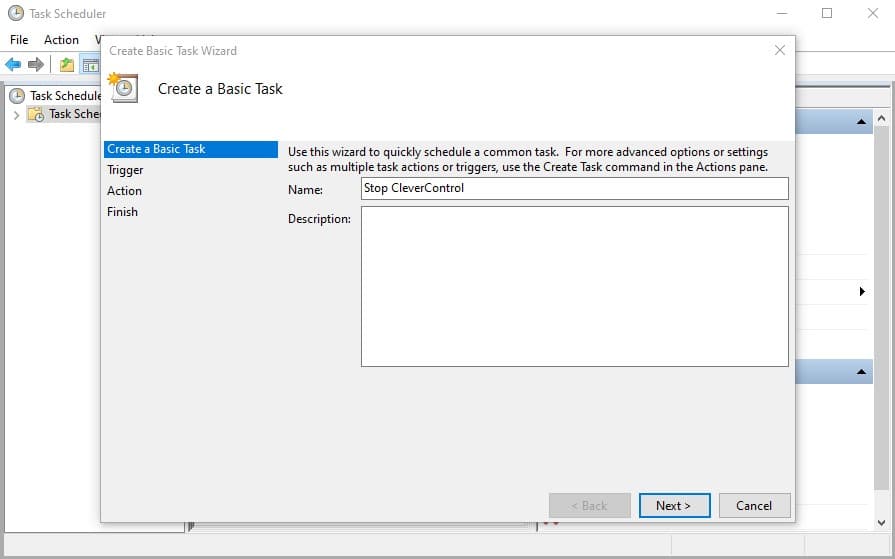
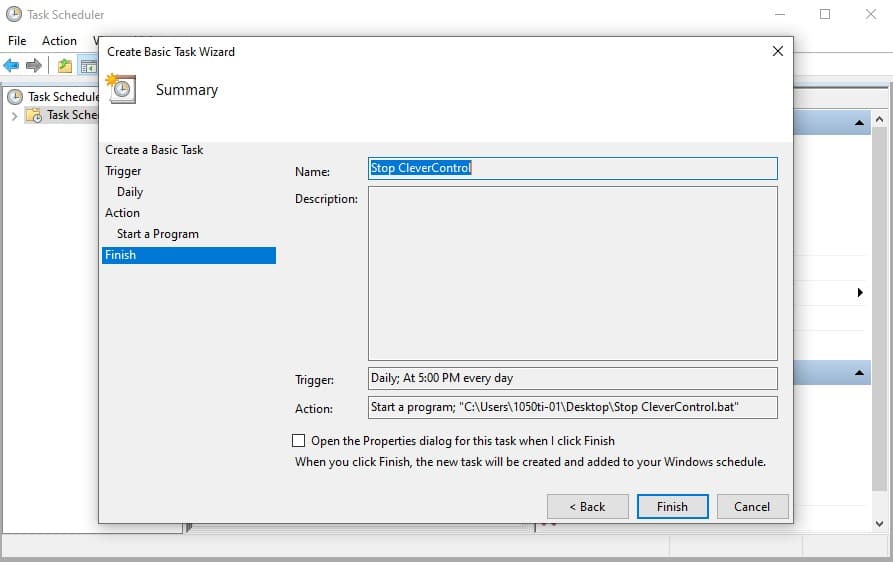
タスクの名前を入力します。例えば、"Stop CleverControl "などです。説明を追加します(オプション)。その後、次へをクリックします。
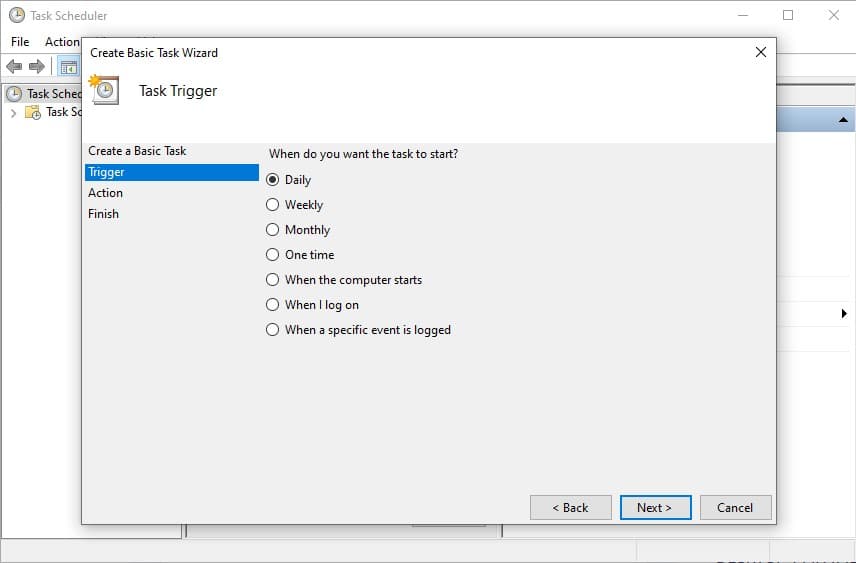
Dailyを選択し、Nextをクリックします。
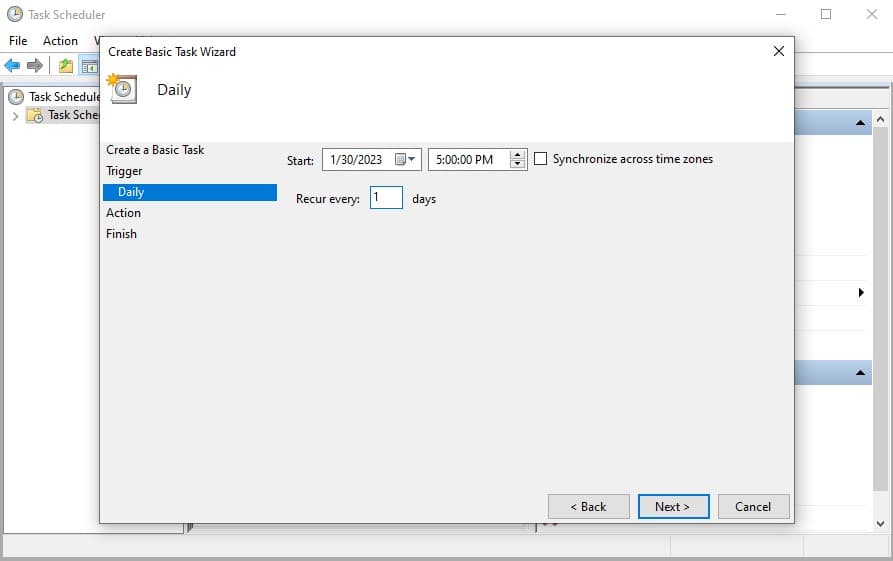
CleverControlを実行する時間、たとえば午後5時00分00秒を選択します。次へをクリックして続行します。
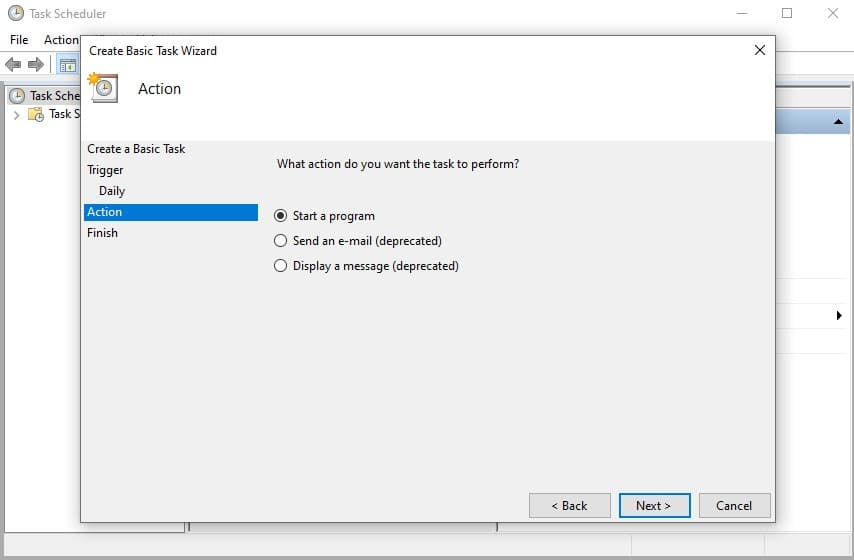
プログラムを開始するを選択し、次へをクリックします。
参照をクリックし、先ほど作成・保存した「Stop CleverControl.bat」ファイルを探します。次へをクリックします。
終了をクリックします。
顔認識機能は基本サブスクリプションには含まれていません。この機能を使用するには、Webカメラ録画機能を追加購入する必要があります。すでにお持ちの場合は、監視対象コンピュータのプログラムを最新バージョンにアップデートしてください。
その後、以下の手順で顔認証機能を有効にします:
1) オンラインダッシュボード > アカウント > コンピュータに移動し、ウェブカメラの録画がオンになっていることを確認します。
2) コンピュータ名の下にある「コンピュータのセットアップ」ボタンをクリックします。
3) Mediaタブに移動し、Face Recognitionセクションまでスクロールダウンします。顔認識オプションをオンにして、ドロップダウンメニューからウェブカメラを選択します。設定完了!
その後、ダッシュボードの「Face Recognition」タブでレポートを確認することができます。
ライフタイムライセンスには、CleverControlのすべての基本機能が含まれています:スクリーンショット、訪問したウェブサイトの追跡、プリンタの動作監視など。また、すべての追加機能にもアクセスできます:画面録画、ウェブカメラ録画+顔認識、通話録画。
はい、生涯ライセンスでご利用いただけます。
ライフタイムライセンスは、CleverControlオンプレミスでのみ利用可能です。
CleverControlによって開始されたすべてのバージョンアップデートは永久に無料です。
いいえ、テクニカル・サポートは永久無料です。製品に関するご質問は、サポートチーム(support'@'clevercontrol.com)まで年中無休でお問い合わせください。