

Data collected by employee monitoring tools is typically perceived as a quantitative measure of an employee's efforts for spreadsheets and quarterly reports. X completed tasks, Y missed deadlines, and Z% productivity on average. However, monitoring data can be valuable material for providing constructive, actionable feedback. Want to know how? We have prepared some practical tips.
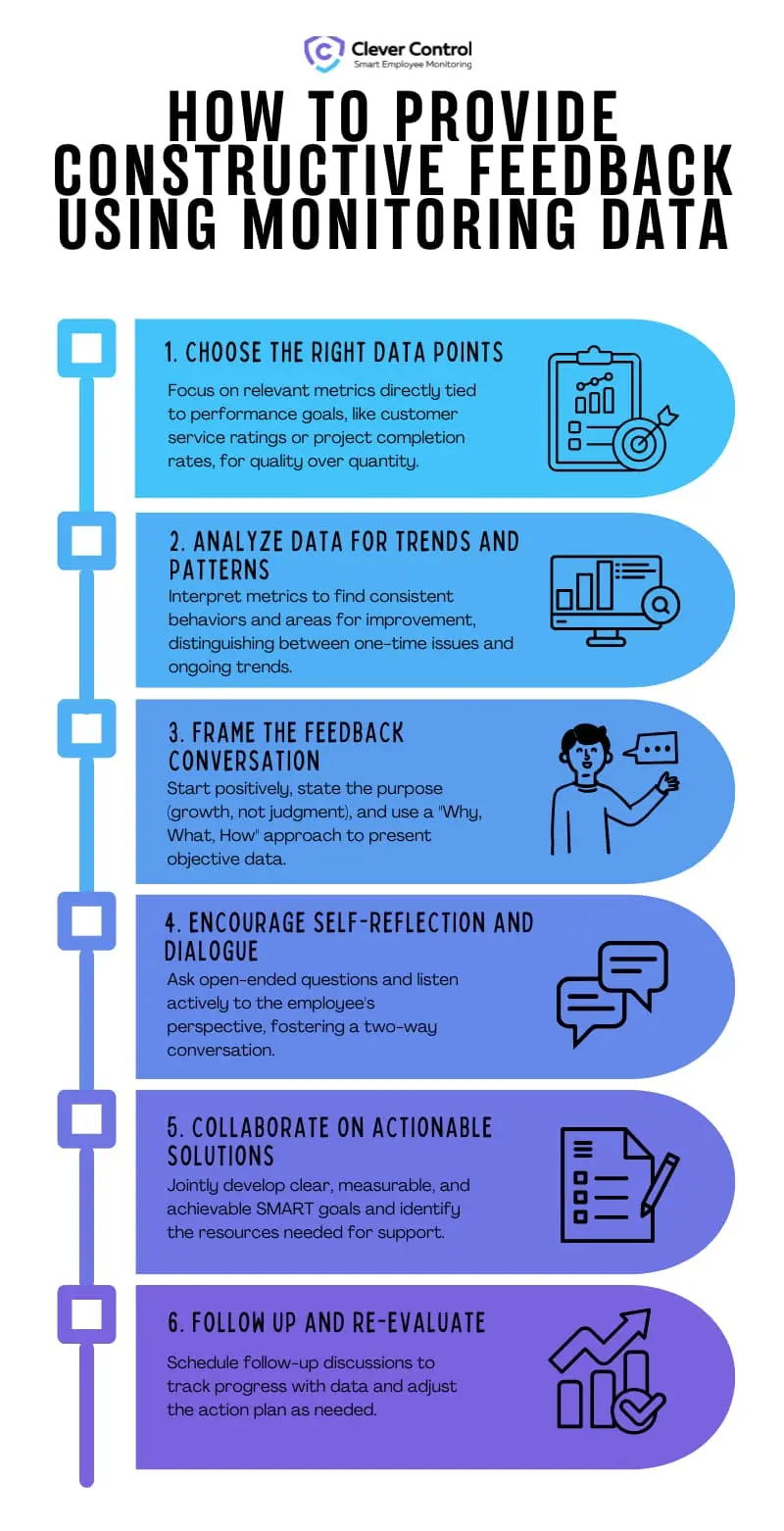
Συμβουλή 1. Επιλέξτε τα σωστά σημεία δεδομένων
Συμβουλή 2. Αναλύστε τα δεδομένα για τάσεις και μοτίβα
A spreadsheet with metrics alone does not bring much benefit. What does is its careful interpretation and discovery of trends and patterns. Has this metric always been low, or is it a one-off dip? Does this employee continuously struggle with a particular type of task? Does their focus always fluctuate at a certain time of the day? When you notice these patterns, you will be able to distinguish between one-time incidents and ongoing problems. Remember to consider the context too that may have influenced the employees' productivity, for example, an increased demand or technical problems.
Συμβουλή 3. Πλαισιώστε τη συζήτηση για την ανατροφοδότηση
Approaching a feedback conversation with data requires a thoughtful touch. Always start with a positive. Acknowledge areas where the data shows strong performance or improvement. This sets a collaborative tone. Then, clearly state the purpose of the discussion: it's about growth and development, not judgment.
Εποικοδομητική ανατροφοδότηση σημαίνει να είστε αντικειμενικοί και να εστιάζετε στη συμπεριφορά και όχι στην προσωπικότητα. Αντί να λέτε "Πάντα χάνετε τις προθεσμίες", δοκιμάστε να πείτε "Οι αναφορές δείχνουν ότι οι εργασίες έχουν καθυστερήσει συστηματικά αυτό το τρίμηνο".
Σκεφτείτε μια προσέγγιση "Γιατί, τι, πώς":
- Γιατί είναι σημαντικά αυτά τα δεδομένα; (Συνδέστε τα με τους στόχους της ομάδας, τον αντίκτυπο στον πελάτη κ.λπ.)
- Τι αποκαλύπτουν συγκεκριμένα τα δεδομένα; (Παρουσιάστε τις μετρήσεις και τις παρατηρούμενες τάσεις.)
- Πώς μπορούμε να βελτιώσουμε ή να αξιοποιήσουμε αυτή τη γνώση για να προχωρήσουμε μπροστά; (Αυτό ανοίγει το δρόμο για τη συνεργατική επίλυση προβλημάτων).
Συμβουλή 4. Ενθαρρύνετε τον αυτο-αναστοχασμό και τον διάλογο
Constructive feedback is a two-way street. When you have given your evaluation, give the employee a word to explain their vision of the situation. You may prompt them by asking open questions, such as "What are your thoughts on your results?" or "What do you think might have contributed to that dip in performance?" They will encourage the employee to reflect on their work and share problems they may be experiencing. Often, they'll have valuable context you might not be aware of, or even suggest solutions themselves. Listen actively and take notes of their insights.
Συμβουλή 5: Συνεργαστείτε σε εφαρμόσιμες λύσεις
Η εποικοδομητική ανατροφοδότηση είναι μόνο το πρώτο βήμα στην πορεία προς τη βελτίωση. Το επόμενο είναι η ανάπτυξη ενός σχεδίου δράσης. Μπορείτε να χρησιμοποιήσετε ένα σύστημα στόχων SMART (Specific, Measurable, Achievable, Relevant, Time-bound) ή οποιοδήποτε άλλο σύστημα, αλλά οι στόχοι που θέτετε θα πρέπει να είναι μετρήσιμοι, σαφείς και εφικτοί. Το "Βελτιώστε την παραγωγικότητά σας" ακούγεται αόριστο και εγείρει ερωτήματα όπως "Τι θεωρείται βελτίωση;", "Τι κάνω για να βελτιωθώ;", "Πότε αναμένεται να παρουσιάσω τα αποτελέσματα;" κ.λπ. Αν όμως εσείς και ο εργαζόμενος συμφωνήσετε στο "Θα επιδιώξω να μειώσω τον μέσο χρόνο ολοκλήρωσης των εργασιών μου κατά 15% μέσα στον επόμενο μήνα χρησιμοποιώντας το νέο εργαλείο διαχείρισης έργων", ο εργαζόμενος θα ξέρει ακριβώς τι πρέπει να επιδιώξει. Προσδιορίστε τυχόν πόρους, εκπαίδευση ή υποστήριξη που μπορεί να χρειαστεί από εσάς ή τον οργανισμό για την επίτευξη αυτών των στόχων. Με μια τέτοια συνεργατική προσέγγιση, ο εργαζόμενος θα σας δει ως υποστηρικτικό συνεργάτη και όχι ως αυστηρό προϊστάμενο, γεγονός που μπορεί να τονώσει ακόμη και το ηθικό του!
Συμβουλή 6. Παρακολούθηση και επαναξιολόγηση
Feedback is an ongoing process, not a one-time event. Use the employee monitoring tool to track the person's progress and, after some time, schedule follow-up discussions to check in on progress and re-examine the monitoring data. Seeing improvements is an incredible motivation for employees! But if the progress is minimal or too slow, it is a sign to adjust and enhance the action plan.
Οικοδόμηση μιας κουλτούρας ανάπτυξης
Building constructive feedback based on monitoring data not only enriches individual performance reviews with objective information and makes the manager's work easier. It also helps create a transparent and strong growth-oriented culture. Feedback grounded in objective information makes employees take ownership of their work and development. It moves away from subjective critiques and towards a shared understanding of performance and potential.