
Data collected by employee monitoring tools is typically perceived as a quantitative measure of an employee's efforts for spreadsheets and quarterly reports. X completed tasks, Y missed deadlines, and Z% productivity on average. However, monitoring data can be valuable material for providing constructive, actionable feedback. Want to know how? We have prepared some practical tips.
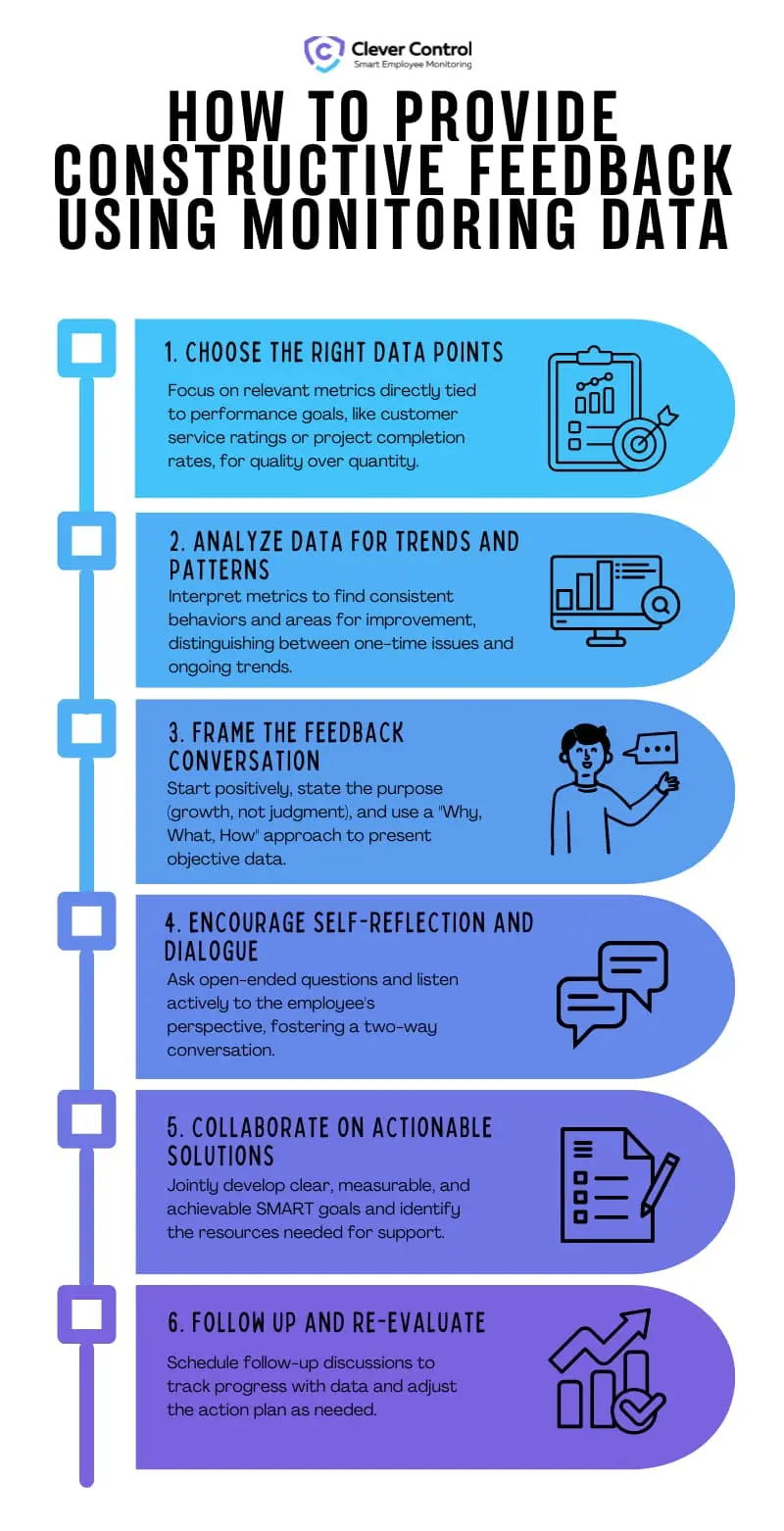
Tip 1. Zvolte správné datové body
Tip 2. Analyzujte data a hledejte trendy a vzorce
A spreadsheet with metrics alone does not bring much benefit. What does is its careful interpretation and discovery of trends and patterns. Has this metric always been low, or is it a one-off dip? Does this employee continuously struggle with a particular type of task? Does their focus always fluctuate at a certain time of the day? When you notice these patterns, you will be able to distinguish between one-time incidents and ongoing problems. Remember to consider the context too that may have influenced the employees' productivity, for example, an increased demand or technical problems.
Tip 3. Formulujte rozhovor o zpětné vazbě
Approaching a feedback conversation with data requires a thoughtful touch. Always start with a positive. Acknowledge areas where the data shows strong performance or improvement. This sets a collaborative tone. Then, clearly state the purpose of the discussion: it's about growth and development, not judgment.
Konstruktivní zpětná vazba znamená být objektivní a zaměřit se spíše na chování než na osobnost. Místo věty "Vždycky nedodržuješ termíny" zkuste říct "Z výkazů vyplývá, že úkoly se v tomto čtvrtletí neustále zpožďují".
Zvažte přístup "Proč, co, jak":
- Proč jsou tato data důležitá? (Spojte je s cíli týmu, dopadem na zákazníky atd.)
- Co konkrétně data ukazují? (Představte metriky a pozorované trendy.)
- Jak můžeme tento poznatek zlepšit nebo využít v budoucnu? (To otevírá cestu ke společnému řešení problémů.)
Tip 4. Podporujte sebereflexi a dialog
Constructive feedback is a two-way street. When you have given your evaluation, give the employee a word to explain their vision of the situation. You may prompt them by asking open questions, such as "What are your thoughts on your results?" or "What do you think might have contributed to that dip in performance?" They will encourage the employee to reflect on their work and share problems they may be experiencing. Often, they'll have valuable context you might not be aware of, or even suggest solutions themselves. Listen actively and take notes of their insights.
Tip 5: Spolupracujte na realizovatelných řešeních
Konstruktivní zpětná vazba je pouze prvním krokem na cestě ke zlepšení. Dalším je vypracování akčního plánu. Můžete použít systém cílů SMART (Specific, Measurable, Achievable, Relevant, Time-bound) nebo jakýkoli jiný systém, ale stanovené cíle by měly být měřitelné, jasné a dosažitelné. "Zlepšit svou produktivitu" zní vágně a vyvolává otázky typu "Co se považuje za zlepšení?", "Co mám udělat pro zlepšení?", "Kdy se mají projevit výsledky?" atd. Pokud se však se zaměstnancem dohodnete na "Budu usilovat o zkrácení průměrné doby plnění úkolů o 15 % během příštího měsíce pomocí nového nástroje pro řízení projektů", bude zaměstnanec přesně vědět, o co má usilovat. Určete veškeré zdroje, školení nebo podporu, kterou by mohl potřebovat od vás nebo od organizace, aby těchto cílů dosáhl. Díky takovému přístupu založenému na spolupráci vás zaměstnanec bude vnímat spíše jako podporujícího partnera než jako přísného nadřízeného, což může dokonce zvýšit jeho morálku!
Tip 6. Sledování a přehodnocení
Feedback is an ongoing process, not a one-time event. Use the employee monitoring tool to track the person's progress and, after some time, schedule follow-up discussions to check in on progress and re-examine the monitoring data. Seeing improvements is an incredible motivation for employees! But if the progress is minimal or too slow, it is a sign to adjust and enhance the action plan.
Budování kultury růstu
Building constructive feedback based on monitoring data not only enriches individual performance reviews with objective information and makes the manager's work easier. It also helps create a transparent and strong growth-oriented culture. Feedback grounded in objective information makes employees take ownership of their work and development. It moves away from subjective critiques and towards a shared understanding of performance and potential.