

Data collected by employee monitoring tools is typically perceived as a quantitative measure of an employee's efforts for spreadsheets and quarterly reports. X completed tasks, Y missed deadlines, and Z% productivity on average. However, monitoring data can be valuable material for providing constructive, actionable feedback. Want to know how? We have prepared some practical tips.
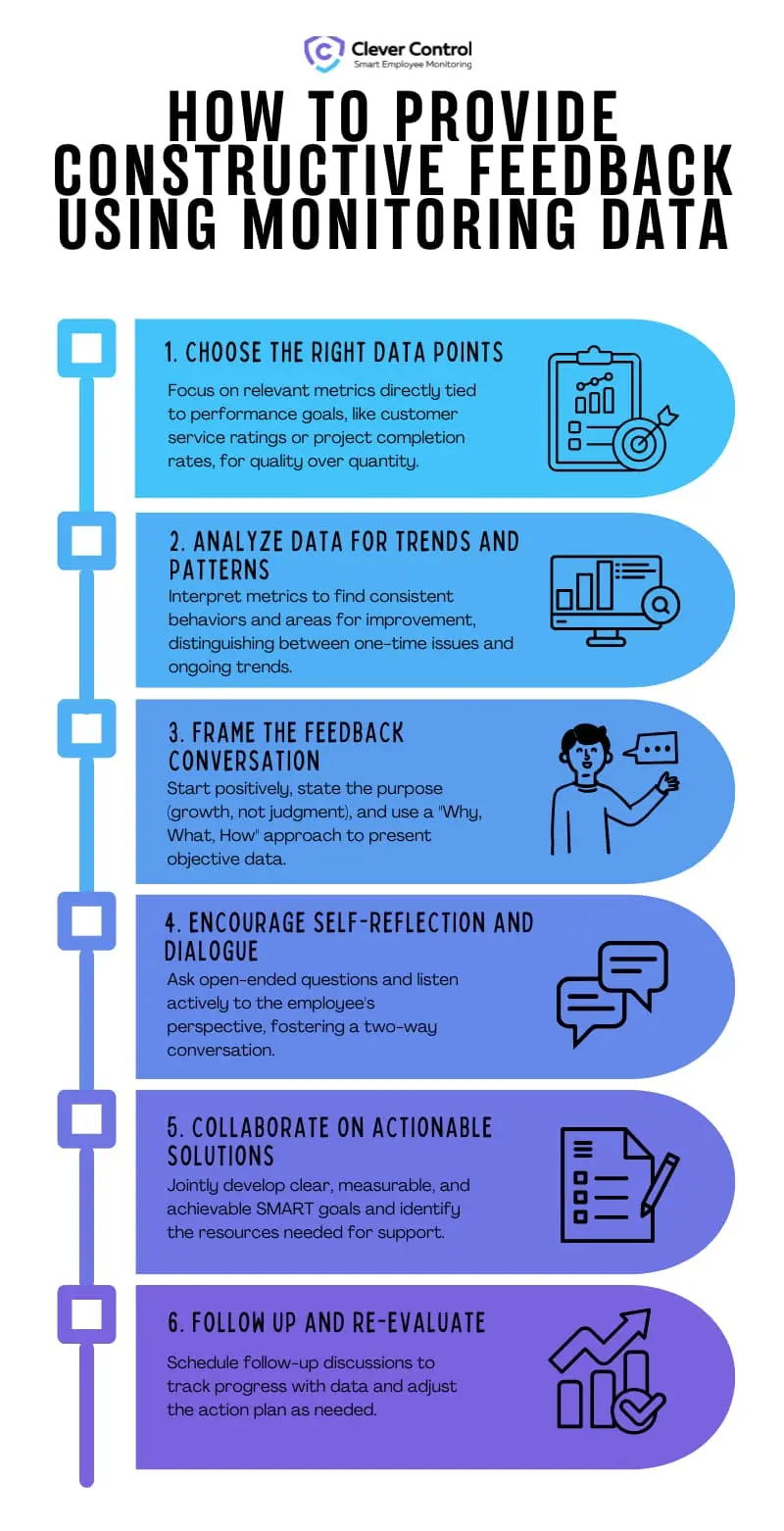
ヒント1.適切なデータポイントを選ぶ
ヒント2.傾向やパターンについてデータを分析する
A spreadsheet with metrics alone does not bring much benefit. What does is its careful interpretation and discovery of trends and patterns. Has this metric always been low, or is it a one-off dip? Does this employee continuously struggle with a particular type of task? Does their focus always fluctuate at a certain time of the day? When you notice these patterns, you will be able to distinguish between one-time incidents and ongoing problems. Remember to consider the context too that may have influenced the employees' productivity, for example, an increased demand or technical problems.
ヒント3.フィードバックの会話を組み立てる
Approaching a feedback conversation with data requires a thoughtful touch. Always start with a positive. Acknowledge areas where the data shows strong performance or improvement. This sets a collaborative tone. Then, clearly state the purpose of the discussion: it's about growth and development, not judgment.
建設的なフィードバックとは、客観的で、性格ではなく行動に焦点を当てることです。あなたはいつも締め切りに間に合わない」と言う代わりに、「報告書によると、今期のタスクは一貫して遅れている」と言おう。
Why、What、How」のアプローチを考える:
- なぜこのデータが重要なのか?
- データは具体的に何を明らかにするのか(指標と観察された傾向を提示する)。
- この洞察を今後どのように改善し、活用できるか?(これは共同での問題解決への道を開くものである)。
ヒント4.内省と対話を促す
Constructive feedback is a two-way street. When you have given your evaluation, give the employee a word to explain their vision of the situation. You may prompt them by asking open questions, such as "What are your thoughts on your results?" or "What do you think might have contributed to that dip in performance?" They will encourage the employee to reflect on their work and share problems they may be experiencing. Often, they'll have valuable context you might not be aware of, or even suggest solutions themselves. Listen actively and take notes of their insights.
ヒント5:実行可能な解決策を共同で考える
建設的なフィードバックは、改善の道のりの第一歩にすぎない。次は行動計画を立てることだ。SMART(Specific, Measurable, Achievable, Relevant, Time-bound:具体的、測定可能、達成可能、関連性がある、期限付き)目標システムでも他のシステムでも構いませんが、設定する目標は測定可能で、明確で、達成可能なものでなければなりません。「生産性を向上させる」というのは漠然と聞こえるし、「何を向上とみなすのか」「向上のために何をすればいいのか」「いつまでに結果を示せばいいのか」などの疑問が生じる。しかし、「新しいプロジェクト管理ツールを使用することで、今後1カ月間で平均タスク完了時間を15%短縮することを目指します」と従業員と合意すれば、従業員は何を目標に努力すべきかが明確になります。これらの目標を達成するために、あなたや組織から必要と思われるリソース、トレーニング、サポートを特定する。このような協力的なアプローチによって、従業員はあなたを厳しい上司ではなく、サポートするパートナーとして見るようになり、士気も高まるかもしれない!
ヒント6.フォローアップと再評価
Feedback is an ongoing process, not a one-time event. Use the employee monitoring tool to track the person's progress and, after some time, schedule follow-up discussions to check in on progress and re-examine the monitoring data. Seeing improvements is an incredible motivation for employees! But if the progress is minimal or too slow, it is a sign to adjust and enhance the action plan.
成長文化の構築
Building constructive feedback based on monitoring data not only enriches individual performance reviews with objective information and makes the manager's work easier. It also helps create a transparent and strong growth-oriented culture. Feedback grounded in objective information makes employees take ownership of their work and development. It moves away from subjective critiques and towards a shared understanding of performance and potential.