

Data collected by employee monitoring tools is typically perceived as a quantitative measure of an employee's efforts for spreadsheets and quarterly reports. X completed tasks, Y missed deadlines, and Z% productivity on average. However, monitoring data can be valuable material for providing constructive, actionable feedback. Want to know how? We have prepared some practical tips.
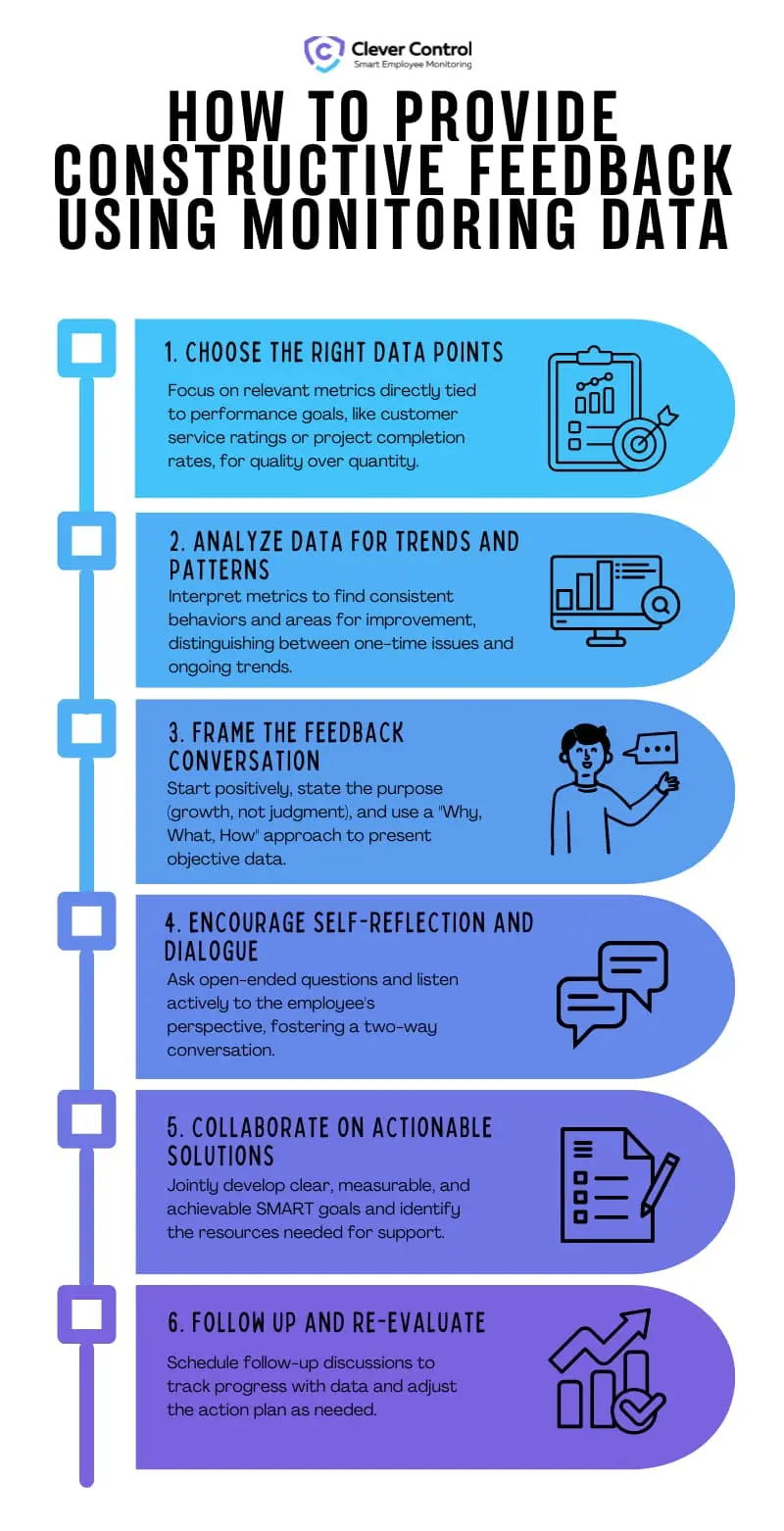
النصيحة 1. اختر نقاط البيانات الصحيحة
النصيحة 2. تحليل البيانات لمعرفة الاتجاهات والأنماط
A spreadsheet with metrics alone does not bring much benefit. What does is its careful interpretation and discovery of trends and patterns. Has this metric always been low, or is it a one-off dip? Does this employee continuously struggle with a particular type of task? Does their focus always fluctuate at a certain time of the day? When you notice these patterns, you will be able to distinguish between one-time incidents and ongoing problems. Remember to consider the context too that may have influenced the employees' productivity, for example, an increased demand or technical problems.
النصيحة 3. تأطير محادثة التغذية الراجعة
Approaching a feedback conversation with data requires a thoughtful touch. Always start with a positive. Acknowledge areas where the data shows strong performance or improvement. This sets a collaborative tone. Then, clearly state the purpose of the discussion: it's about growth and development, not judgment.
التغذية الراجعة البناءة تعني أن تكون موضوعيًا وتركز على السلوك بدلًا من التركيز على الشخصية. فبدلًا من قول "أنت دائمًا ما تفوت المواعيد النهائية"، جرّب أن تقول "تُظهر التقارير أن المهام كانت تتأخر باستمرار في هذا الربع من العام".
ضع في اعتبارك نهج "لماذا، ماذا، كيف":
- لماذا تعتبر هذه البيانات مهمة؟ (اربطها بأهداف الفريق وتأثيرها على العملاء وما إلى ذلك).
- ما الذي تكشفه البيانات على وجه التحديد؟ (اعرض المقاييس والاتجاهات المرصودة).
- كيف يمكننا تحسين هذه الرؤية أو الاستفادة منها للمضي قدمًا؟ (وهذا يمهد الطريق لحل المشاكل بشكل تعاوني).
النصيحة 4. تشجيع التأمل الذاتي والحوار
Constructive feedback is a two-way street. When you have given your evaluation, give the employee a word to explain their vision of the situation. You may prompt them by asking open questions, such as "What are your thoughts on your results?" or "What do you think might have contributed to that dip in performance?" They will encourage the employee to reflect on their work and share problems they may be experiencing. Often, they'll have valuable context you might not be aware of, or even suggest solutions themselves. Listen actively and take notes of their insights.
النصيحة 5: التعاون على حلول قابلة للتنفيذ
التغذية الراجعة البناءة ليست سوى الخطوة الأولى على طريق التحسين. الخطوة التالية هي وضع خطة عمل. يمكنك استخدام نظام أهداف SMART (أهداف محددة وقابلة للقياس وقابلة للتحقيق وذات صلة بالموضوع ومحددة زمنيًا) أو أي نظام آخر، ولكن يجب أن تكون الأهداف التي تضعها قابلة للقياس وواضحة وقابلة للتحقيق. "تبدو عبارة "تحسين إنتاجيتك" غامضة وتثير تساؤلات مثل "ما الذي يعتبر تحسنًا؟" و"ماذا أفعل للتحسين؟" و"متى يتوقع مني أن أظهر النتائج؟ ولكن إذا اتفقت أنت والموظف على "سأسعى إلى تقليل متوسط وقت إنجاز المهام بنسبة 15% خلال الشهر القادم باستخدام أداة إدارة المشاريع الجديدة"، فسيعرف الموظف بالضبط ما الذي يجب أن يسعى إليه. حدد أي موارد أو تدريب أو دعم قد يحتاج إليه منك أو من المؤسسة لتحقيق هذه الأهداف. من خلال هذا النهج التعاوني، سيراك الموظف كشريك داعم وليس كمشرف صارم مما قد يرفع من معنوياته!
النصيحة 6. المتابعة وإعادة التقييم
Feedback is an ongoing process, not a one-time event. Use the employee monitoring tool to track the person's progress and, after some time, schedule follow-up discussions to check in on progress and re-examine the monitoring data. Seeing improvements is an incredible motivation for employees! But if the progress is minimal or too slow, it is a sign to adjust and enhance the action plan.
بناء ثقافة النمو
Building constructive feedback based on monitoring data not only enriches individual performance reviews with objective information and makes the manager's work easier. It also helps create a transparent and strong growth-oriented culture. Feedback grounded in objective information makes employees take ownership of their work and development. It moves away from subjective critiques and towards a shared understanding of performance and potential.