

Data collected by employee monitoring tools is typically perceived as a quantitative measure of an employee's efforts for spreadsheets and quarterly reports. X completed tasks, Y missed deadlines, and Z% productivity on average. However, monitoring data can be valuable material for providing constructive, actionable feedback. Want to know how? We have prepared some practical tips.
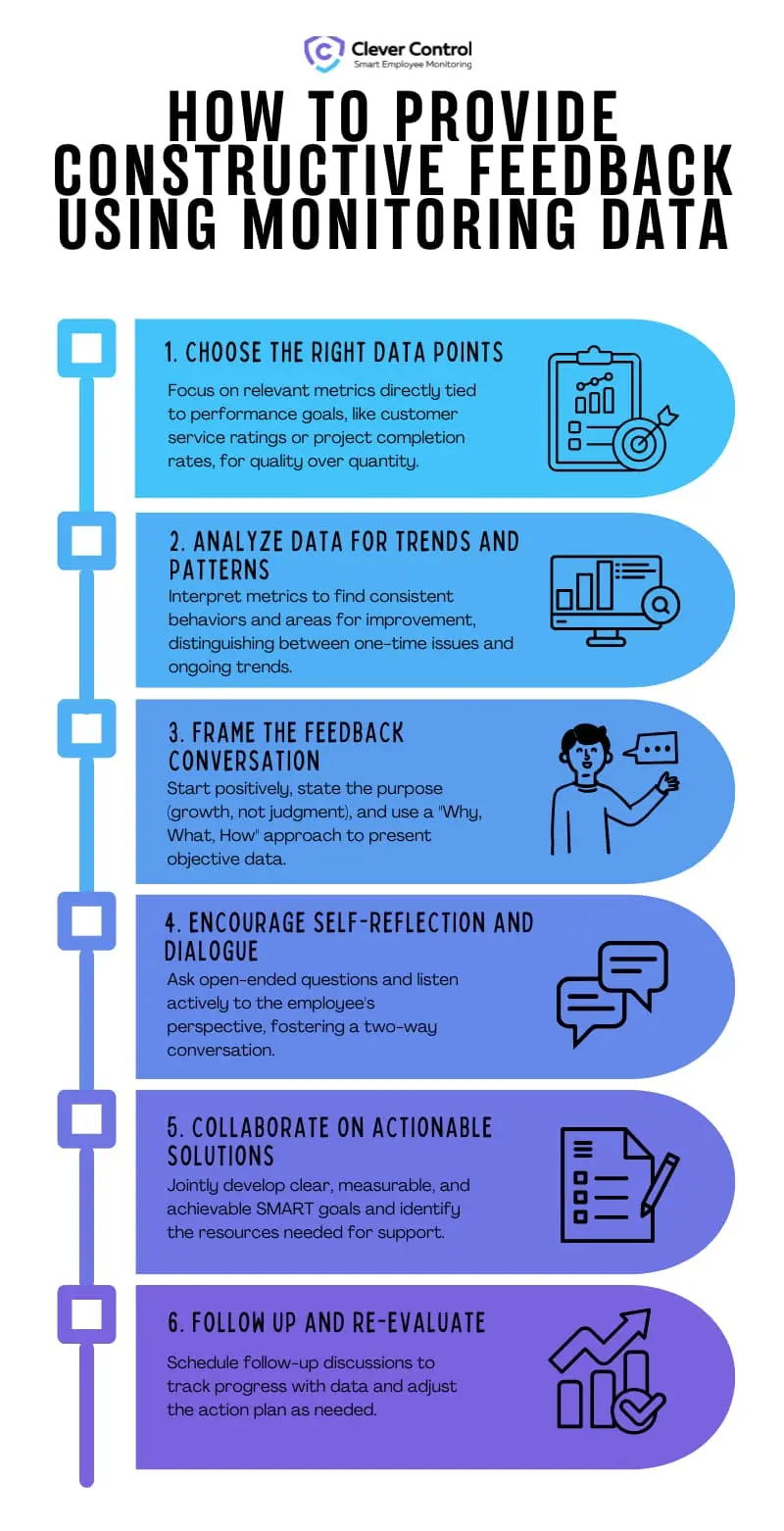
技巧 1.选择正确的数据点
技巧 2.分析数据,找出趋势和模式
A spreadsheet with metrics alone does not bring much benefit. What does is its careful interpretation and discovery of trends and patterns. Has this metric always been low, or is it a one-off dip? Does this employee continuously struggle with a particular type of task? Does their focus always fluctuate at a certain time of the day? When you notice these patterns, you will be able to distinguish between one-time incidents and ongoing problems. Remember to consider the context too that may have influenced the employees' productivity, for example, an increased demand or technical problems.
技巧 3.确定反馈对话的框架
Approaching a feedback conversation with data requires a thoughtful touch. Always start with a positive. Acknowledge areas where the data shows strong performance or improvement. This sets a collaborative tone. Then, clearly state the purpose of the discussion: it's about growth and development, not judgment.
建设性反馈意味着要客观,关注行为而不是个性。与其说 "你总是错过最后期限",不如试着说 "报告显示,本季度的任务一直在拖延"。
考虑采用 "为什么、做什么、怎么做 "的方法:
- 为什么这些数据很重要? 将其与团队目标、客户影响等联系起来
- 数据具体揭示了什么?
- 我们如何才能在今后的工作中改进或利用这种洞察力?(这为合作解决问题铺平了道路)。
技巧 4.鼓励自我反思和对话
Constructive feedback is a two-way street. When you have given your evaluation, give the employee a word to explain their vision of the situation. You may prompt them by asking open questions, such as "What are your thoughts on your results?" or "What do you think might have contributed to that dip in performance?" They will encourage the employee to reflect on their work and share problems they may be experiencing. Often, they'll have valuable context you might not be aware of, or even suggest solutions themselves. Listen actively and take notes of their insights.
秘诀 5:合作制定可行的解决方案
建设性反馈只是改进道路上的第一步。下一步是制定行动计划。你可以使用 SMART(具体、可衡量、可实现、相关、有时限)目标系统或任何其他系统,但你设定的目标应该是可衡量的、明确的、可实现的。"提高你的工作效率 "听起来含糊不清,会引发诸如 "怎样才算提高?"、"我该怎么做才能提高?"、"我应该在什么时候展示成果?"等问题。但是,如果你和员工达成共识:"通过使用新的项目管理工具,我将争取在下个月把平均任务完成时间缩短 15%",员工就会清楚地知道自己的努力方向。确定他们实现这些目标可能需要你或组织提供的任何资源、培训或支持。通过这种合作方式,员工会将你视为一个支持性的合作伙伴,而不是一个严格的主管,这甚至会提高他们的士气!
技巧 6.跟进和重新评估
Feedback is an ongoing process, not a one-time event. Use the employee monitoring tool to track the person's progress and, after some time, schedule follow-up discussions to check in on progress and re-examine the monitoring data. Seeing improvements is an incredible motivation for employees! But if the progress is minimal or too slow, it is a sign to adjust and enhance the action plan.
建设增长文化
Building constructive feedback based on monitoring data not only enriches individual performance reviews with objective information and makes the manager's work easier. It also helps create a transparent and strong growth-oriented culture. Feedback grounded in objective information makes employees take ownership of their work and development. It moves away from subjective critiques and towards a shared understanding of performance and potential.