
常见问题
员工监控:一般问题
Employee monitoring software allows organizations to track work hours and analyze how employees use their work time and company devices. Such software usually monitors the start and end of the work day, idle time, computer activity, application and website usage, communication, and in some cases, location. Companies use employee monitoring software to evaluate productivity, enhance security, protect data, and ensure compliance with company policies.
Typically, employee monitoring software is a small program (sometimes called an agent) that employers install on employees' computers or devices. This agent works in the background and collects data on various activities. The collected data is then transmitted to a central server or dashboard, where authorized personnel, such as managers and administrators, can view and analyze it.
When implemented transparently and with ethical considerations, employee monitoring is a powerful tool for increasing productivity. It provides insights into work processes, helps detect inefficiencies, and encourages data-driven measures to improve the situation. Besides, the awareness of being monitored can encourage employees to stay focused and on task.
When choosing employee monitoring software, consider features that align with your needs, such as tracking work hours, improving productivity, or maintaining security. Valuable features are:
- time tracking;
- website and application usage monitoring;
- idle time detection;
- screenshots/screen recording;
- reporting and analytics;
- alerts and notifications;
- online monitoring dashboard;
- integrations.
Employee monitoring is important because it contributes to a more secure, efficient, compliant, and productive work environment. It provides employers with valuable insights into how work time is spent, helping to:
- highlighting inefficient work processes;
- improving productivity;
- increasing security;
- ensuring compliance with company policies and legal requirements;
- optimizing resources
- supporting performance evaluations.
When implemented thoughtfully and transparently, employee monitoring leads to several positive outcomes for both the organization and the employees. It is a powerful tool to improve workflow efficiency and productivity. It can encourage employees to be responsible for their work hours, identify training needs, and help managers recognize and reward performance. Besides, employee monitoring helps protect the company against data breaches, cyber threats, and inappropriate behavior, creating a safer work environment for everyone.
The main benefits of employee monitoring are better performance and productivity, enhanced data security, lower risks or insider threats, improved accountability, better resource management and allocation, and informed decision-making.
On the other hand, monitoring can potentially decrease employee morale, undermine trust, create unwanted stress and pressure, and negatively affect the company culture. Besides, if tracking is implemented without considering applicable regulations, it can raise legal and ethical concerns.
Employers typically state they track and monitor employee behaviors to improve productivity, enhance security and protect sensitive data, ensure compliance with internal policies and external regulations, prevent time theft, and gain insights into work patterns for better resource management and performance evaluation.
The primary business reasons for employee monitoring include safeguarding company assets and intellectual property, minimizing legal liabilities through compliance and record-keeping, and optimizing workflows. Besides, employee monitoring is a valuable data source to back decisions aimed at improving overall business performance and profitability.
These risks include potentially damaging employee trust and morale, increasing stress and anxiety among the workforce, facing legal challenges related to privacy violations, misinterpreting data which could lead to unfair treatment, and potentially stifling creativity and innovation due to constant surveillance.
Critics fear that employee monitoring programs can lead to a surveillance-heavy work culture that erodes privacy, reduces autonomy, increases job-related stress and burnout, creates an imbalanced power dynamic between employers and employees, and could be used to discriminate against certain workers or suppress legitimate workplace organizing.
The legality of employee monitoring depends on the location. Generally, it is legal in many jurisdictions, including the USA, Europe, and India. However, the scope of activities the employer can monitor may vary depending on the applicable state and local regulations. Besides, organizations are often obliged to notify the staff about the monitoring.
Generally, employers are allowed to track computer and internet usage on company equipment, monitor work-related communications through company email and messaging systems, and use video surveillance in common work areas. Monitoring of personal devices, private communications, or private areas like restrooms is typically restricted or prohibited.
Identifying a single "weakest" employee monitoring law is difficult. Legal frameworks differ significantly across jurisdictions: some deliver minimal employee privacy protections, while others have stricter notification and consent requirements. Generally, areas with fewer specific statutes addressing electronic monitoring and workplace privacy may offer less protection to employees.
Employees can check for monitoring software by looking for unfamiliar processes running in their computer's Task Manager or system monitor, analyzing network activity for unusual data transfers, and using security programs.
There are several signs that the employer may be monitoring the computer: unusual computer behavior, such as slow performance, strange pop-ups or errors, suspicious processes in the Task Manager or Activity Monitor (on macOS), or increased network activity. If employees notice these signs, they can check installed apps for unfamiliar names, use antivirus or security software, or consult the IT or HR specialist in their organization.
On macOS, employees can open Activity Monitor to view running processes and identify unfamiliar or suspicious applications. One can also examine login items and launch agents that start automatically, review network utility for unusual connections, and check System Settings/Preferences for installed profiles that might indicate device management or monitoring.
Attempting to block employee monitoring software on a company-owned device is generally not advisable. It may violate company policy, potentially leading to disciplinary action, including termination. Technical methods to impede monitoring, such as using virtual machines, attempting to disable processes, or using tools to mimic activity, may be detectable by the employer and could have serious consequences. It is best to understand and comply with your company's monitoring policies.
CleverControl 软件常见问题
CleverControl是一个基于云的软件,所以所有安装在你员工电脑上的CleverControl Agent记录的数据都保存在一个远程安全服务器上。而要访问这些数据,你需要注册一个账户,以便能够在远程服务器上安全地查看你的信息。
CleverControl与Windows操作系统和OS X兼容,因此你可以将其安装在任何运行任何Windows版本的笔记本电脑或台式机上,包括最新的Windows 10或10.13 High Sierra及以上版本的OS X。
我们认为,在安装CleverControl Agent之前,您先注册一个账户会更方便。因为要完成安装过程,你需要输入你的账户信息以建立与云服务器的连接。因此,如果你没有账户,你会被提示创建一个账户。
CleverControl is intended for lawful employee monitoring on company-owned devices and should be used with proper authorization, employee notification, and internal policies. Employers are responsible for informing employees about monitoring and configuring the software according to applicable laws and workplace privacy requirements. Employees can get access to the collected data via the Self-Monitoring feature.
Yes. CleverControl Agent can record configured work-related activity on authorized company devices, according to the organization's monitoring policy and applicable law. Reports may include application usage, website activity, screenshots, and other enabled features, where legally permitted and properly disclosed.
Yes. CleverControl can record configured website activity on authorized company devices. Depending on the settings, applicable laws, and the company's internal policies, authorized managers may review visited websites and related screenshots.
是的,网站屏蔽是CleverControl Agent的功能之一。您可以屏蔽某些网页或整个类别,例如所有的社交网络。您可以在您账户的 "远程设置 "中进行设置。
要看到CleverControl Agent的数据,你需要在仪表板上登录你的远程账户:https://dashboard.clevercontrol.com/ 。你可以使用任何设备上的任何网络浏览器来登录。
目前,需要以管理员权限访问计算机来安装该程序。然而,安装过程只需要几秒钟。
所有的设置都可以在你的仪表板账户中远程更改和应用。进入 "远程设置 "选项卡更改设置,并点击 "应用于此计算机 "或 "应用于所有计算机"。
储存的条件根据数据的类型而不同,具体如下。事件--一年,截图--六个月,屏幕记录、网络摄像头记录和通话记录--一个月。之后,数据会自动删除,没有恢复的可能。如果你想把事件记录和屏幕截图保留到该时间之后,你可以使用报告来导出数据。
Important: Automatic start scheduling should be configured only on authorized company devices and according to the organization's written monitoring policy, working-hours rules, and applicable law. Monitored users must be informed in advance, and consent must be obtained where required.
CleverControl默认是在你打开电脑时启动。有时你可能需要它在一天中的预定时间运行。在当前版本的程序中,不可能通过设置来安排CleverControl自动启动。但是,你可以在Windows任务调度器的帮助下做到这一点。
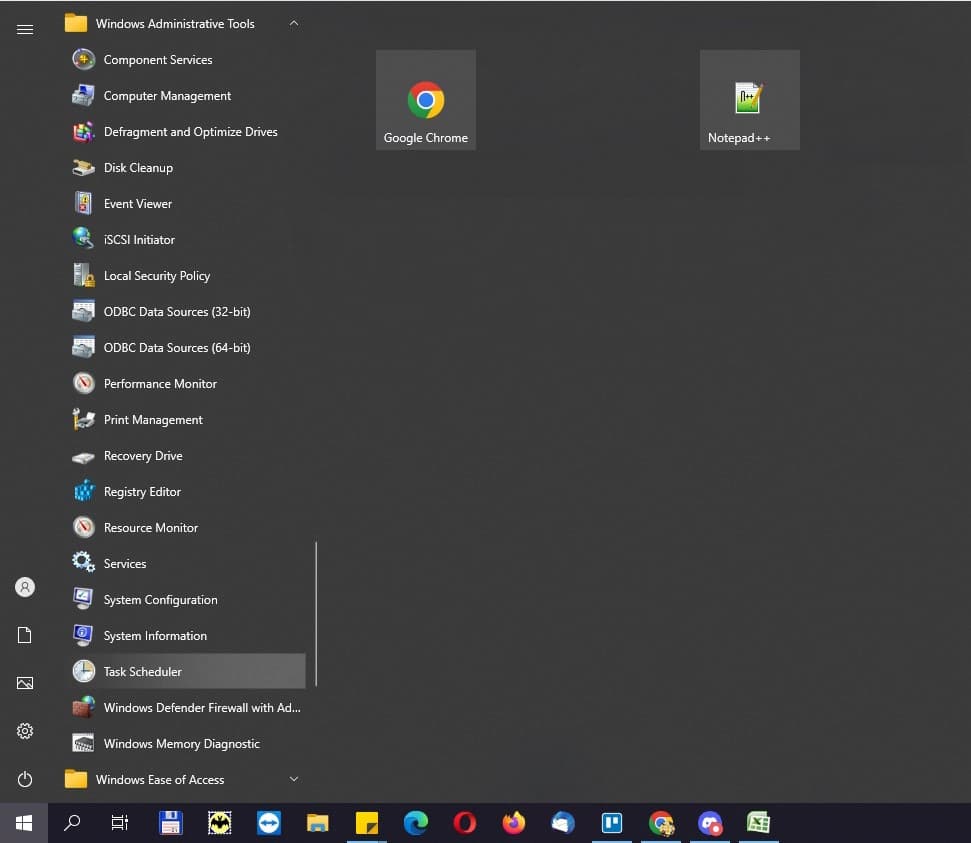
点击任务栏中的Windows图标。向下滚动程序列表,找到Windows管理工具。点击文件夹展开,并点击任务调度器来运行它。
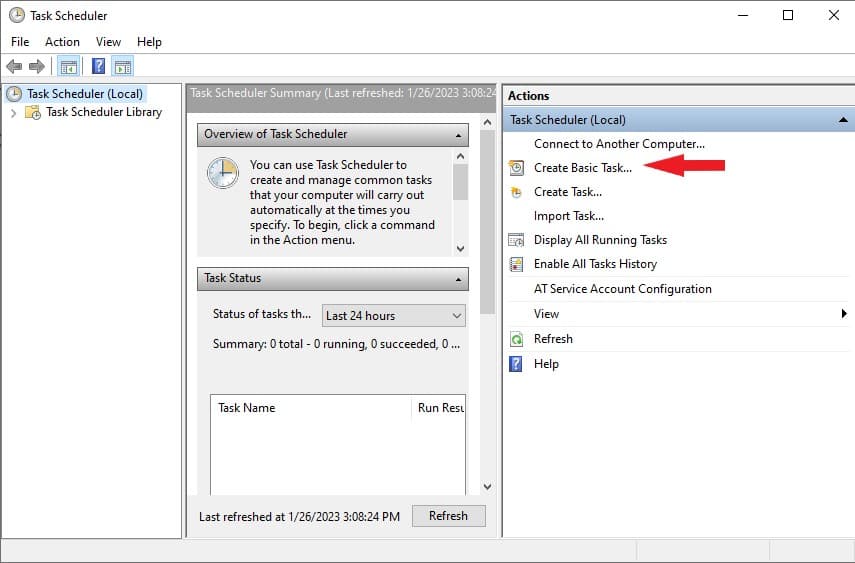
点击创建基本任务。
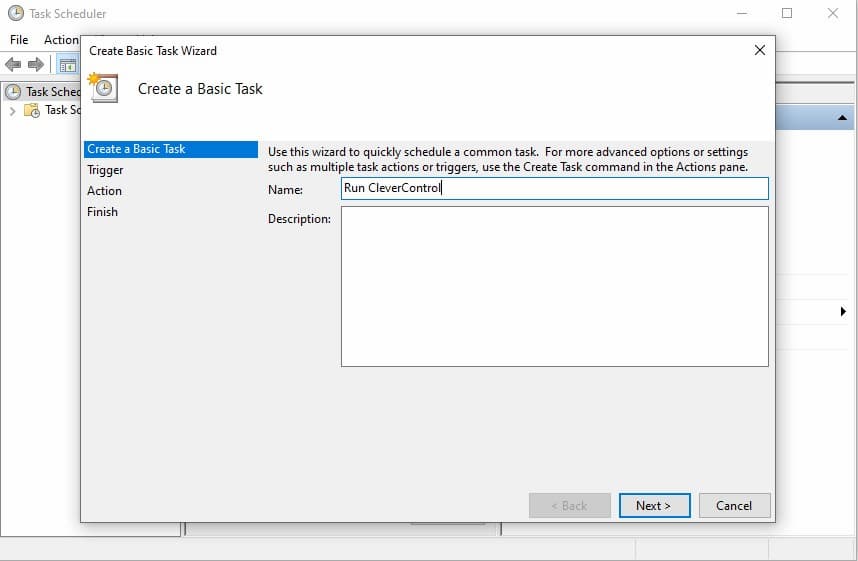
输入任务的名称,例如 "运行CleverControl"。添加一个描述(可选)。之后,点击下一步。。
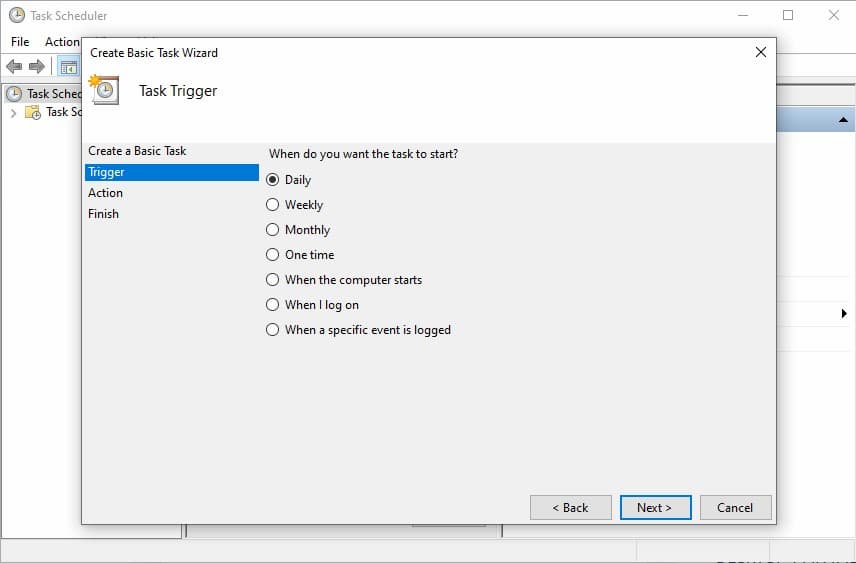
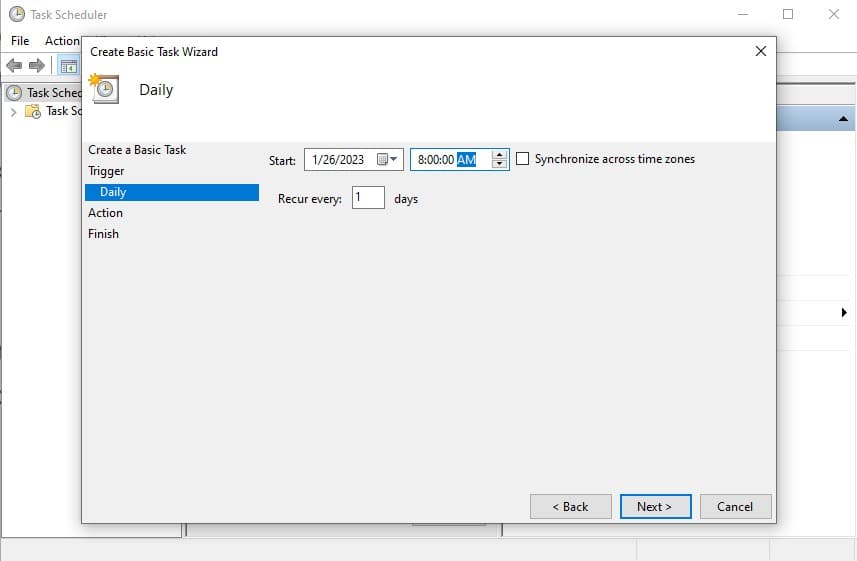
选择每日,然后点击下一步。
设置CleverControl运行的时间,例如,上午8:00:00。点击下一步,继续。
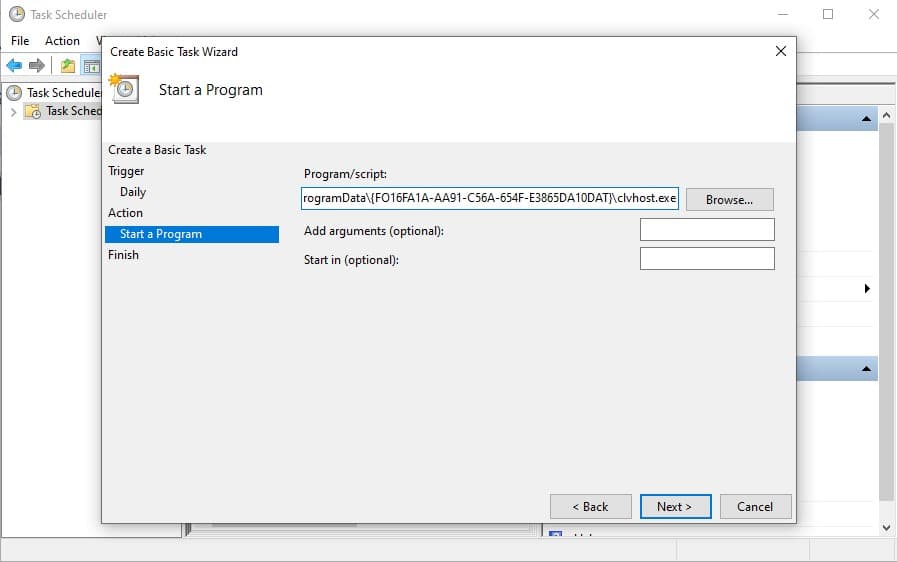
Copy and paste the path: C:\ProgramData\FO16FA1A-AA91-C56A-654F-E3865DA10DAT\clvhost.exe to the Program/Script field. Click Next.
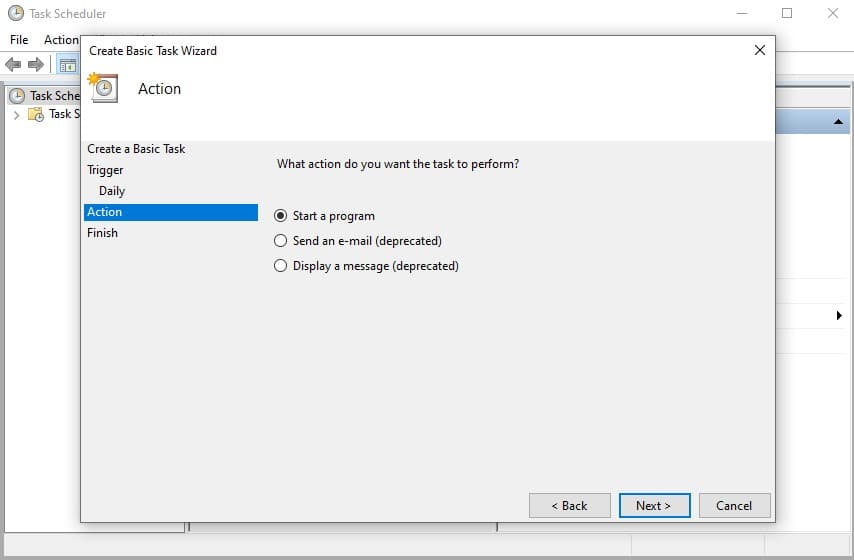
点击完成。
Important: Automatic stop scheduling can help align monitoring with working hours and internal policy requirements. Organizations should configure monitoring schedules according to their written monitoring policy, notify monitored users in advance, and obtain consent where required by law.
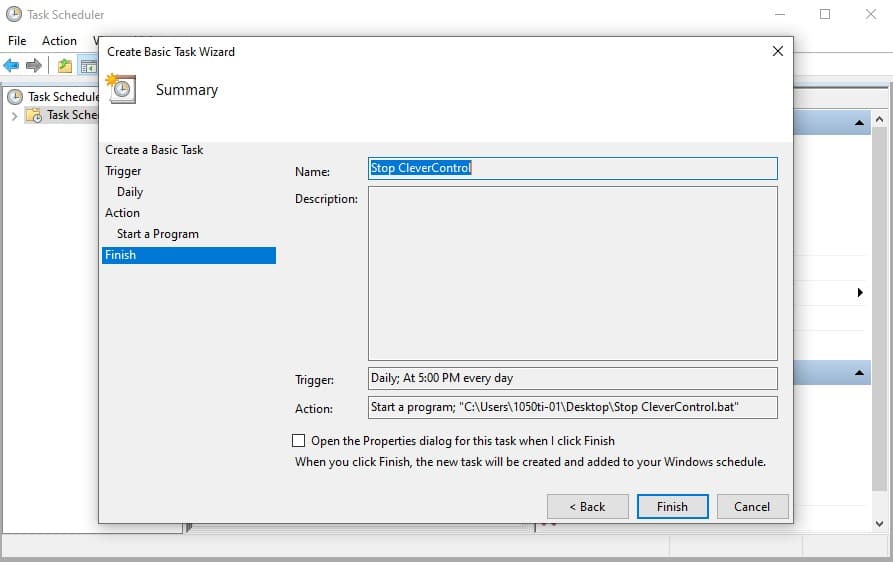
在默认情况下,CleverControl在被监控的计算机上一直运行。但是,如果你使用个人电脑工作,你会希望在工作日结束后停止监控。在当前版本的程序中,不可能通过设置来安排CleverControl自动停止。但是,你可以在Windows任务调度程序的帮助下做到这一点。
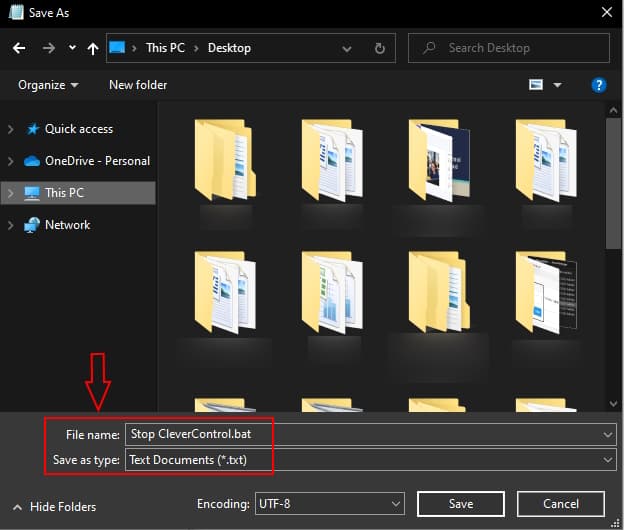
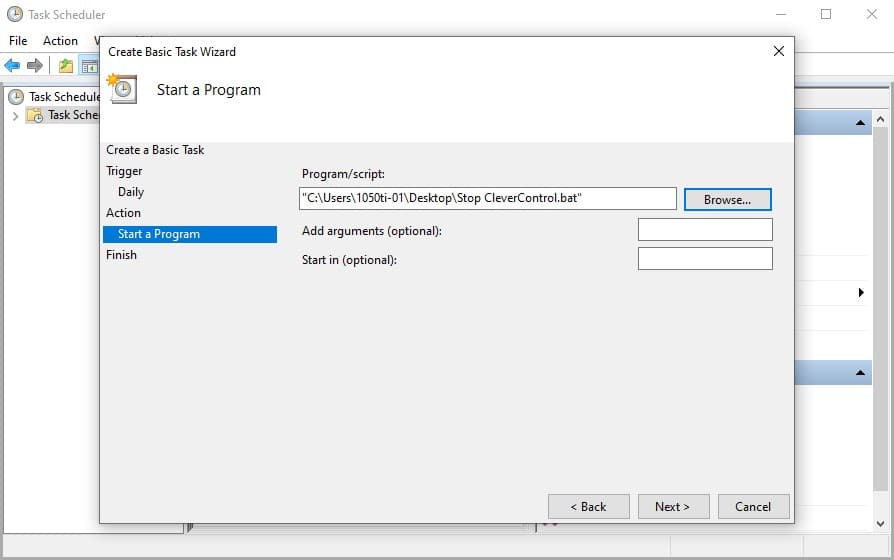
首先,你应该创建一个批处理脚本,运行并关闭该程序。打开记事本,键入以下内容。TASKKILL /F /IM clvhost.exe
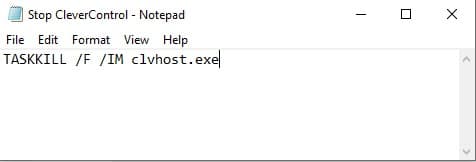
用.bat扩展名保存文件,例如,"Stop CleverControl.bat"。
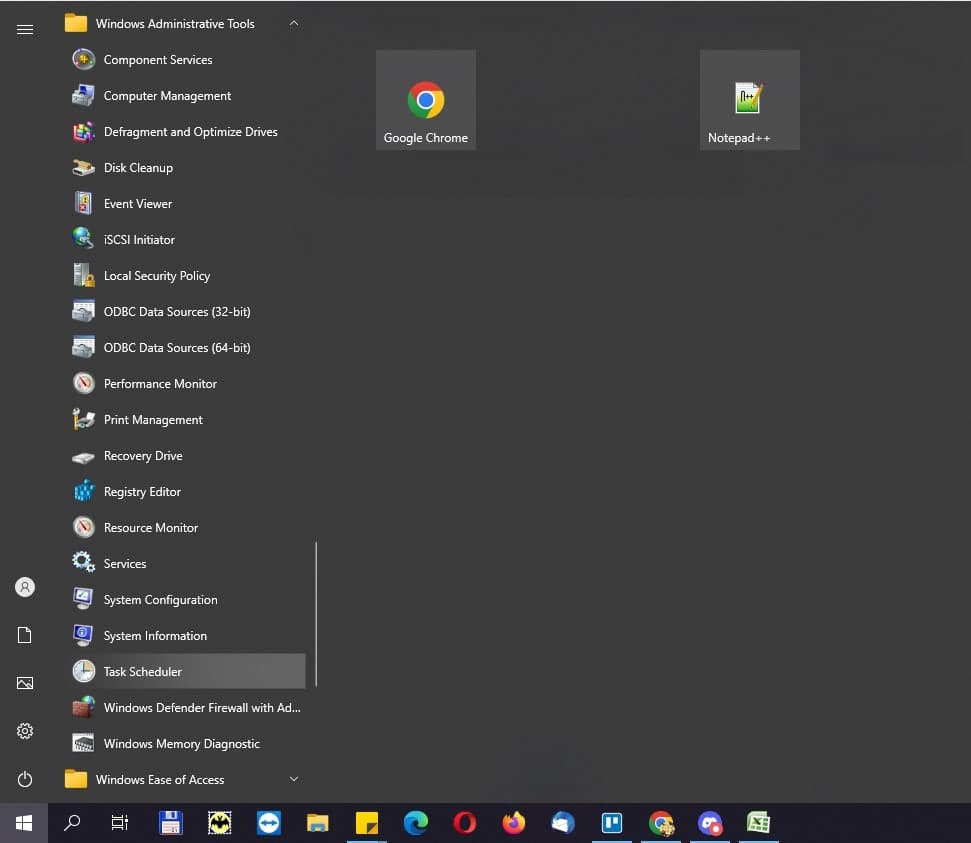
之后,你应该安排任务来停止CleverControl。点击任务栏中的Windows图标。向下滚动程序列表,找到Windows管理工具。点击该文件夹展开,并点击任务调度器来运行它。
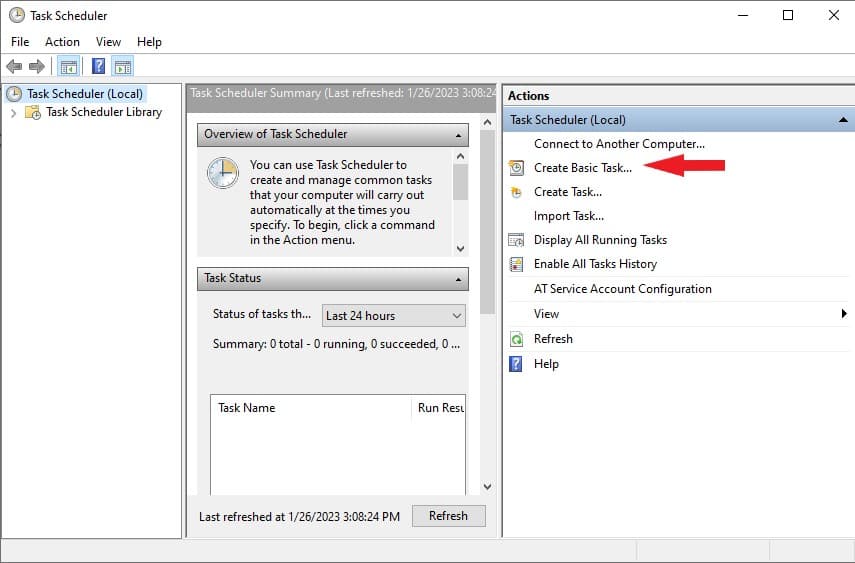
点击创建基本任务。
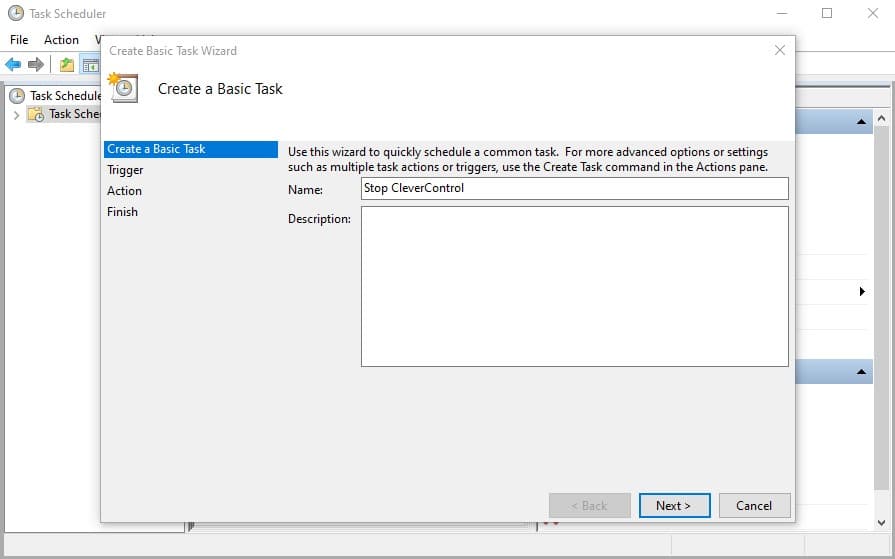
输入任务的名称,例如 "停止CleverControl"。添加一个描述(可选)。之后,点击下一步。
选择每日,并点击下一步。
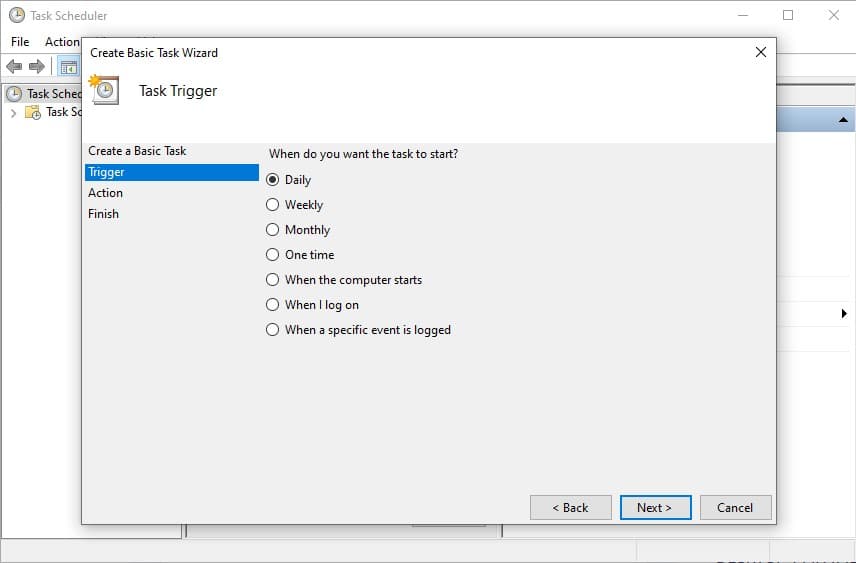
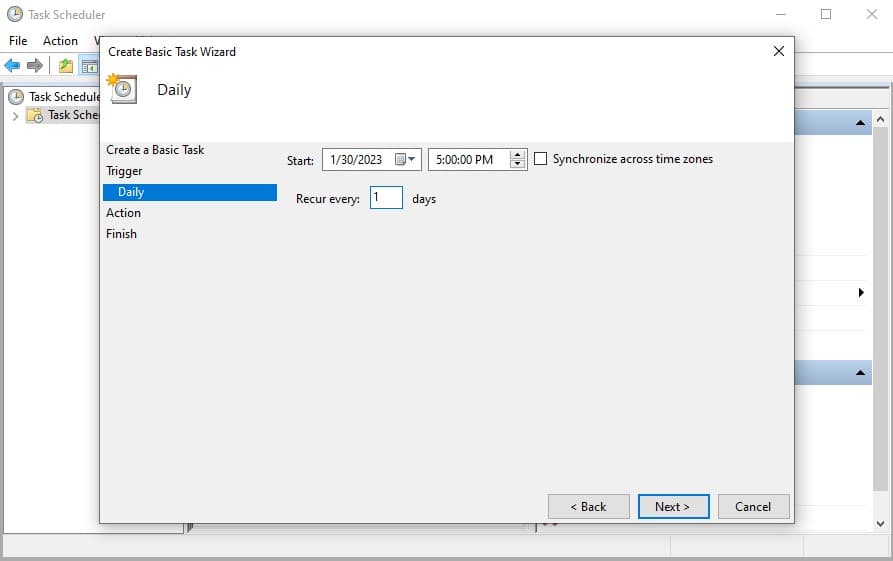
选择CleverControl运行的时间,例如,下午5:00:00。点击下一步,继续。
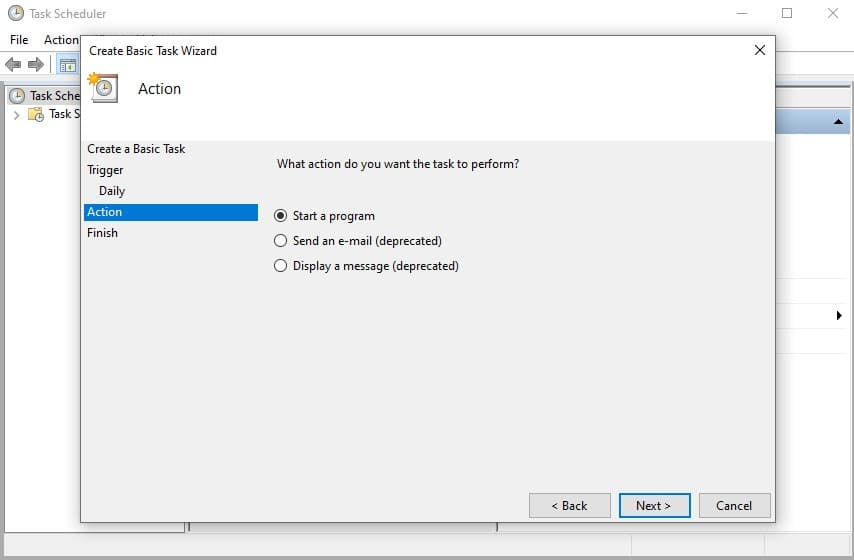
选择启动一个程序,然后点击下一步。
点击浏览,找到你刚刚创建并保存的 "Stop CleverControl.bat "文件。单击下一步。
点击完成。
基本套餐不包括人脸识别功能。要开始使用该功能,您需要购买网络摄像头录制附加功能。如果已经购买,则应将受监控计算机上的程序更新到最新版本。
之后,按照这些步骤激活人脸识别:
1) 进入在线仪表板 > 帐户 > 计算机,确保网络摄像头录制已打开。
2) 单击计算机名称下的设置计算机按钮。
3) 转到 "媒体 "选项卡,向下滚动到 "面部识别 "部分。切换 "面部识别 "选项,并在下拉菜单中选择网络摄像头。一切就绪!
之后,你可以在仪表板上的人脸识别标签上找到该报告。
终身许可证包括 CleverControl 的所有基本功能:屏幕截图、跟踪访问的网站、打印机活动监控等。此外,你还可以使用所有附加功能:屏幕录制、网络摄像头录制+人脸识别和通话录音。
是的,它们可以终身使用。
终身许可证只适用于CleverControl On-Premise。
所有由 CleverControl 启动的版本更新都是永久免费的。
不,技术支持是永久免费的。有关产品的任何问题,您都可以全天候通过 support'@'clevercontrol.com 联系我们的支持团队。